
Asphalt Paving Contractor in Austin, TX
So Your Asphalt Is Falling Apart Again
If you've owned a home or run a business in Austin for more than a few years, you've probably watched a driveway or parking lot go from smooth to cracked in a shorter time than you expected. It's not really your fault. It's usually the pavement's fault, or more accurately, the way it was put in the ground to begin with.Austin sits on a strange mix of rock and clay. Drive across town and the soil under your feet can change completely in a few miles. One neighborhood sits on solid limestone shelf, another sits on clay that swells up after a storm and shrinks back down in August. Asphalt that isn't installed with that in mind is basically living on borrowed time.That's the part PaveTec spends the most energy on. Not just laying asphalt, but reading the ground first and building a base that can actually handle what Austin throws at it.
What We Actually Do
People usually call us for one of a few reasons. Maybe it's a new driveway that needs to go in before the house is finished. Maybe it's a business owner tired of patching the same potholes in the parking lot every spring. Or maybe the pavement is fine on the surface but water pools in the same spot every time it rains, which tells us something's off underneath.We install new asphalt driveways for homeowners, and we build and maintain parking lots for businesses, from small retail spots to larger commercial properties that need striping, drainage planning, and enough durability to handle daily traffic. When pavement is still structurally sound but looking rough, resurfacing brings it back without the cost of tearing everything out. And when the base has actually failed, we'll tell you that too, and walk you through a full replacement instead of talking you into a patch job that won't hold.We also handle sealcoating, which honestly does more for the lifespan of your asphalt than most people realize. A little bit of upkeep now saves a lot of money later.
Why People Keep Calling Us Back
We're not the only paving company in Austin, and we know that. What tends to bring people back, or get us referred to their neighbor, comes down to a few things we hear a lot. We tell people the truth, even when it means a smaller job and a smaller invoice. If a patch will genuinely hold, we're not going to talk you into replacing the whole driveway. We also don't disappear once the invoice is paid. Asphalt problems that show up six months later usually trace back to something we can fix quickly if you just call us. And because our crews work all over the Austin metro, from Round Rock to Lakeway, we've generally already seen whatever soil or drainage quirk your property has. None of that is flashy. It's just the stuff that actually matters once the trucks show up.
How to Tell If It's Time to Call
You don't need to wait for a driveway to look like a disaster before reaching out. A few things worth paying attention to: cracks that keep coming back no matter how many times they've been filled, a soft or spongy feeling when you walk or drive over certain spots, water that never seems to drain the way it should, or potholes that reappear in the same place every few months. Any one of those usually points to a base problem, not just a surface one, and catching it early is a lot cheaper than waiting.
What the Process Looks Like
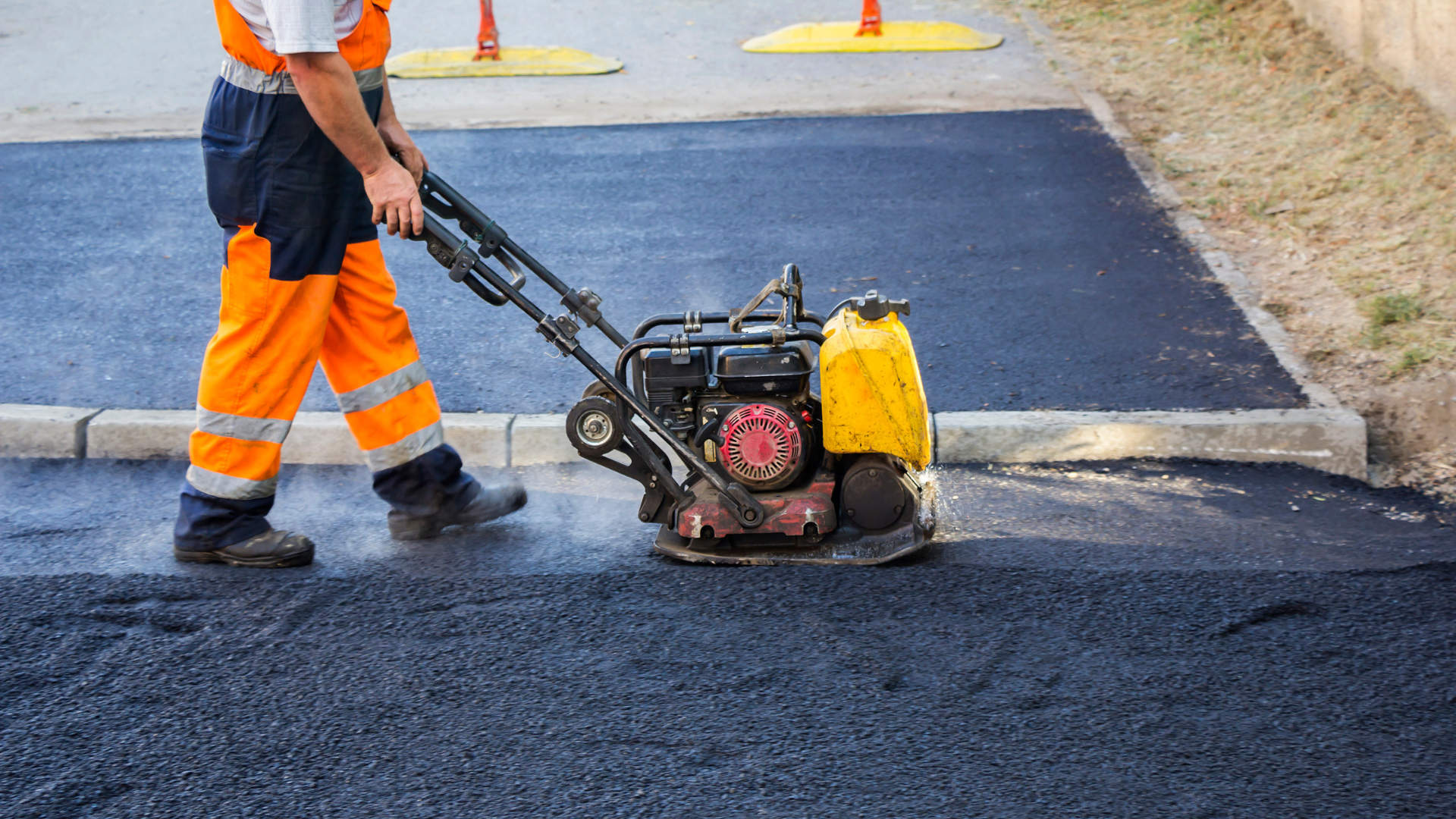
We start with a free walkthrough of your property, where we look at the current condition (or the raw site, if it's a new install) and talk through what you're trying to accomplish and what it'll cost. From there we grade the site and build the base, which is honestly where most of the long term durability comes from. Once that's right, we lay and compact the asphalt to a thickness that matches how the surface will actually be used. For parking lots, that includes striping and any signage or curbing you need. For driveways, we pay close attention to the edges and transitions so it doesn't look like an afterthought. Before we consider the job finished, we walk it with you so you can point out anything you want addressed.
Where We Work
PaveTec covers the greater Austin area, including Round Rock, Cedar Park, Pflugerville, Georgetown, and Lakeway, along with everything closer to the city center. Hill country lots, flat suburban streets, older neighborhoods with mature trees and root systems, we've paved through most of what Austin can throw at a crew.
A Little Goes a Long Way
If you want your asphalt to actually last, sealcoating every couple of years is the single best thing you can do. After that, just don't ignore small cracks. They're cheap to fix early and expensive to fix once water's been getting into them for a year. And if you notice standing water in the same spot after every rain, don't wait on it. That's usually the pavement telling you something before it becomes a bigger problem.
Ready to Get a Quote?
If you're dealing with a driveway that's past saving or a parking lot that needs work, reach out to PaveTec. We'll come take a look, tell you what we actually think, and give you a straightforward price.
Frequently Asked Questions
How much does asphalt paving cost in Austin? It really depends on the project size, site conditions, and whether you need a new install, a resurface, or a full replacement. We'll give you a real number after seeing the site in person, not a rough guess over the phone.
How long does the job take? A typical driveway is done in a couple of days. Commercial lots take longer depending on size and how much prep work the site needs.
When can I actually drive on it? Give new asphalt a few days before regular traffic. We'll tell you the exact timeline for your project once it's poured, since it depends a bit on weather.
Asphalt or concrete, which is better? Neither is universally better. Asphalt costs less up front and goes in faster. Concrete usually lasts longer with less maintenance. It really comes down to your budget and how long you plan to be at the property.
Do you deal with permits? Yes, for commercial jobs we handle that so it's one less thing on your plate.
How often should I sealcoat? Every two to three years is a good rule of thumb, though heavier traffic or a lot of direct sun can shorten that window.