
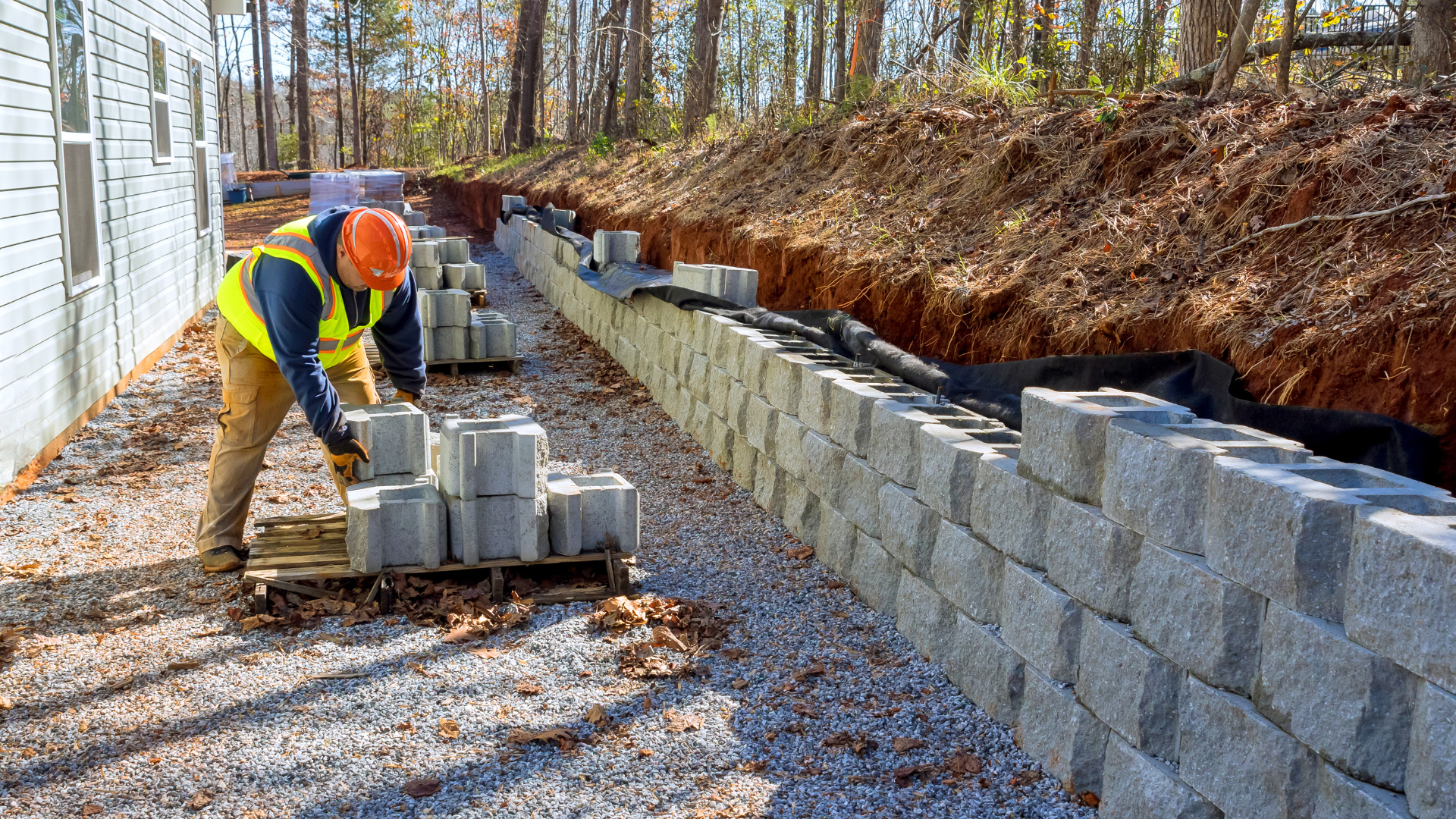
Retaining Wall Installation in Houston, TX
Why So Many Houston Retaining Walls Fail Early
Drive through almost any older Houston neighborhood and you'll spot at least one retaining wall that's leaning, bulging, or cracked apart. It's a common sight, and there's a reason for it. Houston's clay soil holds onto water and swells when it's wet, then shrinks when it dries out. A wall that isn't built to handle that pressure and movement is fighting a losing battle from day one.Add in Houston's habit of dumping several inches of rain in a single afternoon, and you've got a lot of water pushing against any wall that doesn't drain properly. Most retaining wall failures we see aren't really about the wall itself. They're about what's happening behind it.PaveTec builds retaining walls around that reality. We think about drainage, soil pressure, and long term stability before we ever start stacking block or pouring concrete, so the wall you get actually stays put.
What a Retaining Wall Can Do for Your Property
A retaining wall isn't just about holding back a slope. In Houston, it often solves a handful of problems at once. It can stop erosion on a sloped yard, create a usable flat area where there wasn't one before, protect a foundation from water and soil pressure, or simply give your landscaping a cleaner, more finished look. Some homeowners come to us because their yard is actively washing away during heavy rain. Others just want to reclaim a hillside for a patio or garden bed.Whatever the reason, the wall needs to be built for the job it's actually doing, not just dropped in because it looks nice.
The Materials We Work With
Segmental retaining wall block is the most common choice for residential walls. It's durable, comes in a range of styles, and doesn't require mortar, which makes it a solid option for most yards.
Poured concrete works well for taller walls or situations that need extra structural strength, especially where a wall is doing serious work holding back a slope or protecting a foundation.
Natural stone gives a more custom, high end look and blends well with existing landscaping, though it typically costs more than block or poured concrete.
Timber is the most budget friendly option and can work fine for shorter walls, though it doesn't hold up as long in Houston's humidity and rain as concrete or block.We'll talk through the tradeoffs with you based on the height of the wall, what it's holding back, and what you want it to look like.
Signs Your Existing Wall Needs Attention
If you already have a retaining wall, a few warning signs are worth taking seriously. A wall that's starting to lean or bulge outward is under more pressure than it can handle. Cracks running through block or concrete usually mean the structure is shifting. Water pooling at the base instead of draining away points to a drainage problem that will only get worse. And gaps opening up between wall sections or at the top of the wall are an early sign of movement. Catching these issues early is almost always cheaper than waiting for a full failure.
How We Build a Wall That Lasts
We start with a site visit to look at the slope, the soil, and what the wall actually needs to accomplish. From there we excavate and prepare a proper base, which is where a lot of retaining walls go wrong if it's rushed or skipped. Drainage comes next, usually gravel backfill and a drain pipe behind the wall to give water somewhere to go instead of building up pressure against the structure. Then we build the wall itself, whether that's block, poured concrete, stone, or timber, making sure each course or pour is level and properly reinforced. Once the wall is up, we finish the backfill and grading around it and walk the site with you to make sure it looks and functions the way you wanted.
Retaining Walls Across Houston
PaveTec builds retaining walls throughout Houston and the surrounding areas, including the Heights, Katy, Sugar Land, Pearland, and The Woodlands. We've worked on everything from small garden walls to larger structural walls protecting home foundations, and we adjust our approach based on the soil and drainage conditions specific to your property.
Keeping a Retaining Wall in Good Condition
Once a wall is properly built, it doesn't need much. Keep an eye on the drainage behind it and make sure water has somewhere to go, especially after heavy storms. Clear away plant growth or debris that could block drain outlets. And if you ever notice new cracking, leaning, or gaps, don't wait to get it looked at. Small issues are easy to fix. Ignored ones tend to turn into full wall replacements.
Let's Take the Pressure Off That Slope
If you're dealing with a failing wall or thinking about adding one to your property, reach out to PaveTec. We'll come take a look, explain what your options are, and give you a clear price with no pressure.
Frequently Asked Questions
How much does a retaining wall cost in Houston?
It depends on the height, length, material, and how much drainage work the site needs. We'll give you a real number after seeing the property in person.
How long does installation take?
A typical residential wall takes a few days to a week, depending on size and material. Larger or taller walls take longer.
Do I need a permit for a retaining wall?
Taller walls often do require a permit in Houston. We'll handle that process for you as part of the project.
Why did my old retaining wall fail?
Most failures come down to poor drainage or a base that wasn't properly compacted. Water builds up pressure behind the wall until it eventually pushes it out of place.
Can you fix an existing wall instead of replacing it?
Sometimes, depending on the extent of the damage. We'll assess it honestly and let you know if a repair makes sense or if replacement is the better long term option.
What's the best material for a Houston retaining wall?
It depends on your budget, the height of the wall, and the look you're going for. Segmental block is the most common choice for good reason, but we'll walk you through what fits your project.