
Concrete Floor Installation in Houston, TX
A Floor That Has to Do More Than Just Sit There
A concrete floor doesn't get much credit until it starts causing problems. It's supposed to hold up under vehicle weight, resist cracking, shed moisture instead of trapping it, and stay flat enough that whatever you're rolling across it, whether that's a car jack, a forklift, or just a shop stool, doesn't hit a bump every few feet. In Houston, that's a bigger ask than people expect. Humidity is high most of the year, the ground underneath shifts with the clay soil, and a slab poured without the right vapor barrier or reinforcement tends to show it within a few years.
PaveTec installs concrete floors for garages, workshops, and commercial buildings across Houston, and we build each one for the specific load and use it's actually going to see. A floor for a home garage doesn't need the same reinforcement as a warehouse floor that's going to see forklift traffic every day, and we plan the pour accordingly instead of treating every slab the same.
The Kinds of Floors We Pour
Residential garage floors. Whether it's a new build or replacing a cracked, uneven slab, we pour garage floors that hold up to vehicle weight and everyday use, with the option to prep the surface for a coating or sealer down the line.
Workshop and shop floors. If you're running equipment, storing tools, or just need a floor that can take a beating, we reinforce and finish it to handle the kind of use a hobby garage doesn't see.
Commercial and warehouse floors. Larger pours need careful planning around load requirements, control joints, and drainage, especially if forklifts, pallet jacks, or heavy shelving are part of the picture. We handle these projects from layout through final finish.
Basement and interior slabs. For additions or interior spaces that need a new slab, we handle the pour with the right moisture barrier so it doesn't cause problems for whatever flooring goes on top of it later.
Why the Base Matters More Than the Concrete Itself
A lot of floor problems in Houston don't actually start with the concrete. They start with what's underneath it. If the base isn't properly compacted, or if a vapor barrier isn't installed correctly under a slab that will have flooring on top of it, moisture works its way up and causes issues that show up months or years later, like glue failure under vinyl or tile, or a musty smell that never quite goes away. We treat the base and vapor barrier as seriously as the pour itself, because that's usually where a bad floor actually went wrong.
Signs an Existing Floor Needs Replacing
If you're dealing with an older slab, a few signs point toward replacement rather than a patch. Cracks that keep widening or running the length of the floor, noticeable dips or high spots that make the surface uneven, a slab that's constantly damp or has a white powdery residue on the surface, or dusting concrete that keeps coming back no matter how many times it's swept or sealed. Any of these usually means something's wrong below the surface, not just on top of it.
Our Installation Process
Free site evaluation. We look at the space, talk through how the floor will actually be used, and figure out the right thickness, reinforcement, and base prep for the job.
Excavation and base prep. We remove existing material if needed and prepare a properly compacted base, adding a vapor barrier where moisture control matters.
Reinforcement. For floors that need to handle heavier loads, we add rebar or wire mesh reinforcement before the pour.
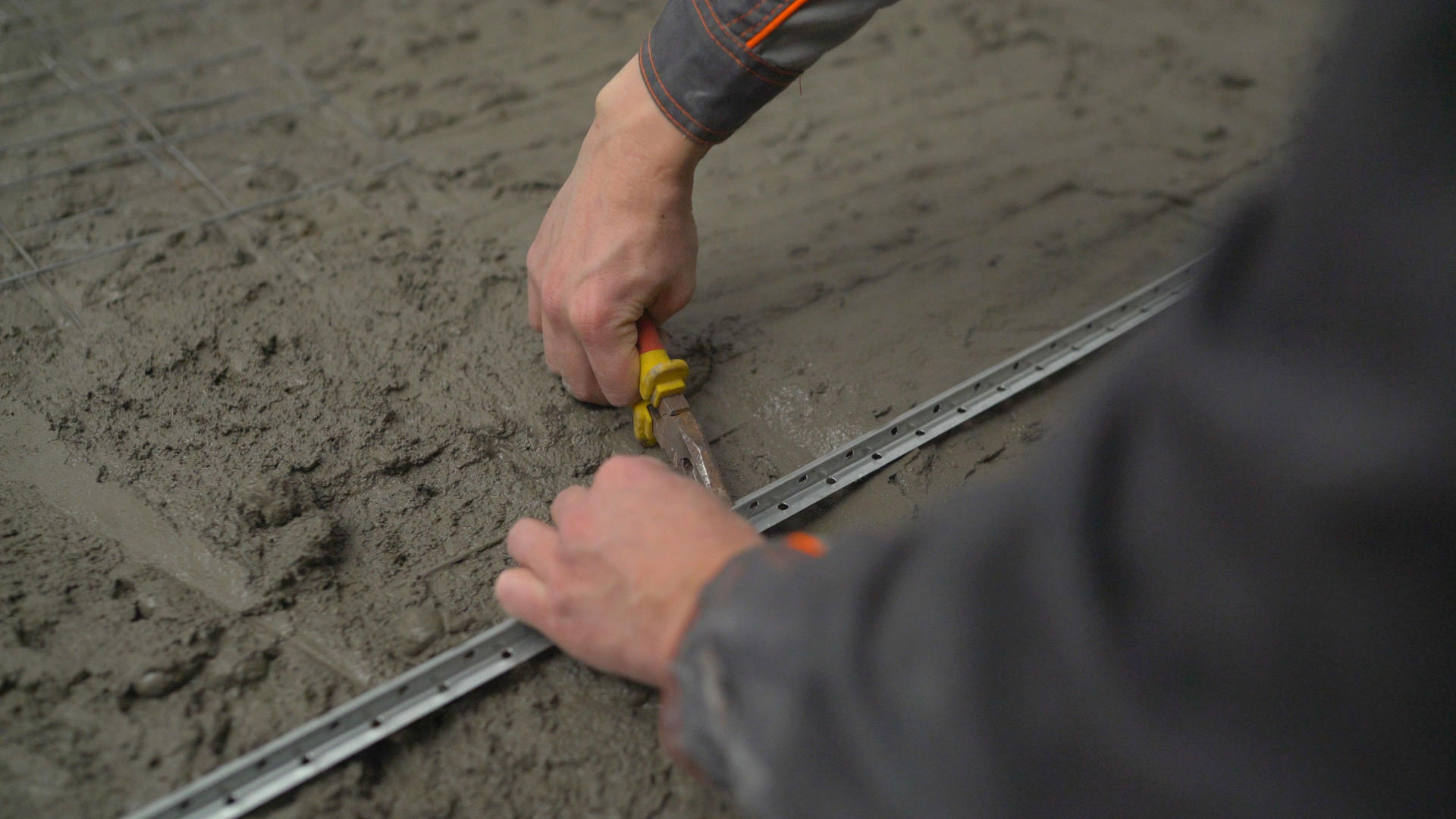
The pour. We pour the concrete to the correct thickness and finish it to match how the space will be used, whether that means a broom finish, a smooth trowel finish, or a surface prepped for a future coating.
Cure and walkthrough. We let the floor cure properly and walk the finished space with you before calling the job done.
Floor Installation Across Houston
PaveTec installs concrete floors for homes and businesses throughout Houston and the surrounding areas, including the Heights, Katy, Sugar Land, Pearland, and The Woodlands. From a single car garage to a full commercial warehouse, we scale the project and the crew to what the job actually needs.
Keeping a Concrete Floor in Good Shape
Once a floor is properly installed, it holds up well with minimal care. Keep it clean and free of standing water where possible, since Houston's humidity already puts moisture pressure on a slab from below. If you're planning to coat or seal the floor, do it once the concrete has fully cured, not before. And keep an eye on any cracks that show up over time. Small ones are easy to seal before they let moisture through.
Ready to Talk Through Your Floor?
Whether it's a garage, a shop, or a commercial space, PaveTec can help you plan and pour a floor that's built for what it actually needs to handle. Reach out and we'll walk you through it.
Frequently Asked Questions
How much does a concrete floor installation cost in Houston? It depends on the size of the space, the thickness and reinforcement needed, and any moisture barrier work. We give you an exact price after seeing the site.
How long does a floor installation take? A residential garage floor usually takes a couple of days including cure time. Larger commercial floors take longer depending on size and complexity.
Do you handle floors for commercial buildings, not just homes? Yes. We install floors for warehouses, shops, and other commercial spaces, planning for the specific load and traffic each one needs to handle.
Can you prep a floor for epoxy or another coating later on? Yes. We can finish the concrete in a way that's ready for a coating once it's fully cured, or coordinate timing if you already have a coating contractor lined up.
Why does my garage floor keep cracking? Cracking usually comes down to a poorly compacted base, insufficient reinforcement, or soil movement underneath. We address all three when we install a new floor.
Is a vapor barrier really necessary in Houston? In most cases, yes, especially if flooring will be installed on top of the slab later. Houston's humidity and soil moisture make it a lot more important here than in drier climates.