
Concrete Floor Installation in Austin, TX
Ground That Changes Under Your Feet
One of the odd things about building in Austin is how much the ground can vary from one side of a lot to the other. Part of a property might sit on solid limestone, while a few feet away it's soft clay that expands and contracts with the seasons. For a concrete floor, that inconsistency matters a lot more than people expect. A slab poured without accounting for it can end up with cracking or uneven settling in one corner while the rest holds up fine, simply because the ground underneath wasn't treated the same way across the whole pour.
PaveTec pours concrete floors for garages, workshops, and commercial spaces across Austin, and we start every project by actually understanding the ground it's going on. That's the difference between a floor that stays flat for decades and one that starts cracking within a few years.
Where We Pour Floors
Residential garage floors. New builds and replacements for cracked or uneven slabs, poured to handle daily vehicle weight and ready for a coating or sealer if you want one down the line.
Workshop and shop floors. For anyone running tools, equipment, or a hobby space that sees more abuse than a typical garage, we reinforce and finish the floor to actually hold up to it.
Commercial and warehouse floors. Austin's growth has meant a lot of new commercial and light industrial space, and we pour floors built for the load, whether that's forklifts, heavy shelving, or constant foot traffic. We plan control joints, drainage, and reinforcement around how the space will actually be used.
Interior and addition slabs. For home additions or interior spaces getting a new slab, we install the right vapor barrier so moisture doesn't cause problems for tile, vinyl, or whatever flooring goes down later.
What Actually Determines How Long a Floor Lasts
The concrete itself gets most of the attention, but the base underneath is usually what makes or breaks a floor over time. If it isn't compacted properly, or if a vapor barrier is skipped where it matters, moisture and ground movement will eventually show up as cracking, uneven spots, or flooring problems above the slab. In Austin specifically, the switch between rocky and clay soil across a single property means the base prep sometimes has to change from one section of the pour to the next. We treat that as part of the job, not an afterthought.
Signs an Old Floor Has Had It
If you're working with an existing slab, a few signs point toward replacing it instead of patching around the problem. Cracks that keep spreading or run the length of the floor, noticeable high or low spots, a surface that's frequently damp or shows a white powdery residue, or dusting concrete that keeps returning no matter how often it's cleaned or sealed. These usually point to a base or moisture issue underneath, which patching the surface won't actually fix.
How the Installation Works
Free site evaluation. We look at the space, talk through how the floor will be used, and figure out the right thickness and reinforcement for the job.
Excavation and base prep. We remove old material if needed and build a properly compacted base, adjusting for whatever mix of rock and clay is actually under that section of the property.
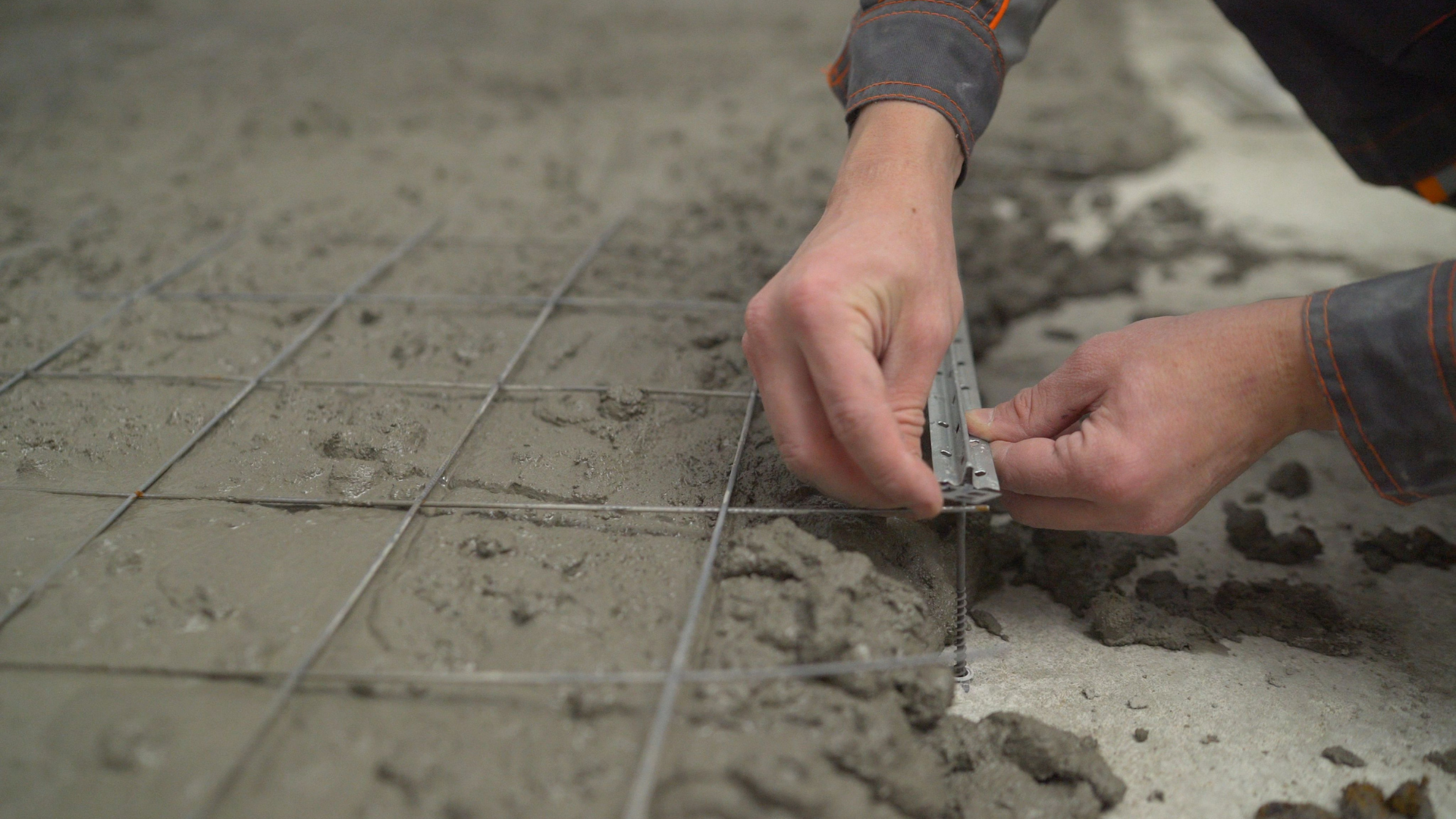
Reinforcement. For floors carrying heavier loads, we add rebar or wire mesh before the pour.
The pour. We pour to the right thickness and finish it based on how the space will be used, whether that's a broom finish, a smooth trowel finish, or a surface prepped for a coating later.
Cure and walkthrough. We let the floor cure fully and walk the finished space with you before wrapping up.
Floor Installation Across the Austin Area
PaveTec pours concrete floors for homes and businesses throughout Austin and the surrounding communities, including Round Rock, Cedar Park, Pflugerville, Georgetown, and Lakeway. Whether it's a single car garage or a commercial warehouse, we scale the crew and the plan to the job.
A Little Upkeep Goes a Long Way
Once a floor is properly poured, it doesn't need much. Keep it clean and dry where you can, since even Austin's drier climate still puts some moisture pressure on a slab from below in certain areas. If you're planning to add a coating, wait until the concrete has fully cured before applying it. And if a crack shows up down the line, seal it early rather than letting it sit, since that's a much smaller job than dealing with moisture getting underneath it later.
Let's Talk Through Your Floor
Garage, shop, or commercial space, PaveTec can help you plan and pour a floor built for what it actually needs to handle. Reach out and we'll walk you through the options.
Frequently Asked Questions
How much does a concrete floor installation cost in Austin? It depends on the size of the space, the thickness and reinforcement needed, and any base or moisture work required. We give you an exact price after seeing the site.
How long does a floor installation take? A residential garage floor usually takes a couple of days including cure time. Larger commercial floors take longer depending on size and complexity.
Do you pour floors for commercial and industrial spaces? Yes. We install floors for warehouses, shops, and other commercial buildings, planning for the specific load and traffic each space needs to handle.
Can you prep a floor for epoxy or another coating later? Yes. We can finish the concrete so it's ready for a coating once fully cured, or coordinate timing if you already have a coating contractor lined up.
Why does my garage floor keep cracking? Cracking usually comes down to a poorly compacted base, not enough reinforcement, or soil movement underneath, which is common in areas where rock and clay sit close together.
Do I need a vapor barrier for an Austin floor? In most cases, yes, especially if flooring will go on top of the slab. It's cheap insurance against moisture problems showing up later.