
Signs Your Parking Lot Needs Repaving, Not Just Patching
Most business owners default to patching when parking lot damage shows up, and for isolated, minor issues, that's usually the right call. But there's a point where repeated patching stops being a cost-effective maintenance strategy and starts becoming a cycle of spending money on the same problem areas without ever actually solving the underlying issue.
Knowing when a parking lot has crossed that line, from needing routine repair to needing a full repaving, can save a business significant money and prevent the safety and liability risks that come with a lot that's deteriorated past the point patching can reasonably fix. Here are the signs that indicate it's time to think beyond another round of patches.
Sign 1: Alligator Cracking Covers a Large Portion of the Lot
A single area of interconnected, web-like cracking, often called alligator cracking, can sometimes be addressed with targeted patching if it's isolated to a small section. But once this pattern spreads across a significant portion of the total lot area, a commonly used industry guideline points to roughly a quarter to a third of the surface, it typically signals the base layer has failed broadly rather than in one spot, a problem patching the surface alone won't actually resolve.
Sign 2: The Same Potholes Keep Coming Back
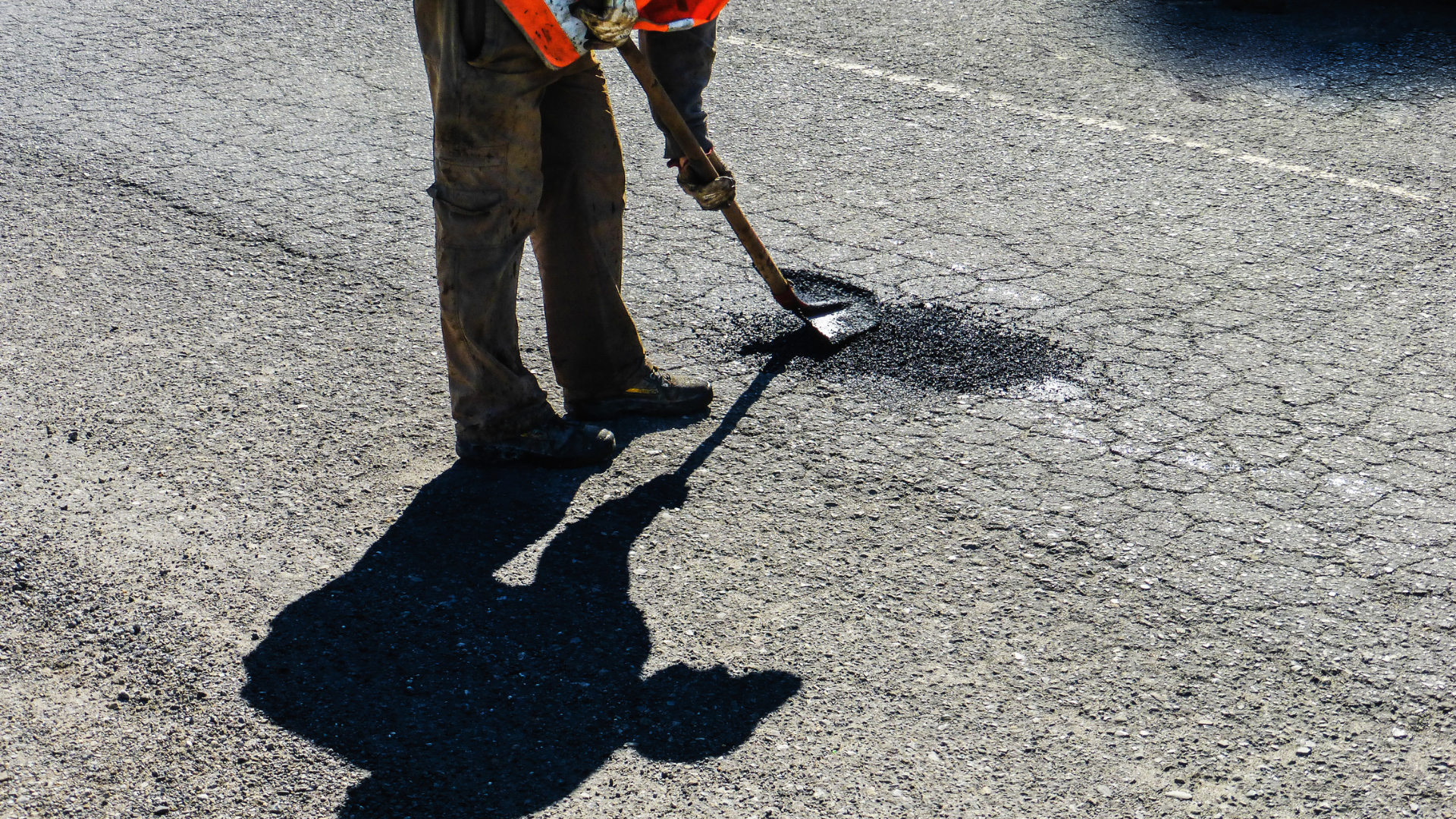
If you find yourself patching the same pothole, or potholes in the same general area, more than once within a year or two, that's a strong signal the underlying base beneath that section has deteriorated. As covered in our article on why Texas roads and lots are so prone to potholes, a surface patch placed over a failed base is essentially a temporary cover rather than a real fix, and it will continue to fail until the base issue itself is addressed.
Sign 3: Visible Base Failure
Beyond cracking and potholes, a few more direct signs point to base failure: edges that are crumbling or breaking away, extensive rutting along regular traffic paths, or sections that visibly flex, feel soft, or shift slightly under vehicle weight. These are signs the structural layer beneath the asphalt surface is compromised, which surface-level patching cannot correct regardless of how often it's applied.
Sign 4: Drainage Problems That Keep Getting Worse
Standing water that pools in the same spots after every rain, and seems to be getting more pronounced over time despite patch attempts, often indicates the base has settled or shifted unevenly across a broader area than any single patch can address. Persistent drainage failure is also one of the more serious long-term concerns, since standing water continues to infiltrate and weaken the base beneath the surface, accelerating further deterioration the longer it goes unaddressed.
Sign 5: The Lot Has a "Patchwork Quilt" Appearance
When a parking lot has accumulated enough individual patches over the years that it starts to look visibly inconsistent, different colors, textures, and ages of asphalt scattered across the surface, it's usually a sign that patching has become the default response to ongoing, widespread deterioration rather than an occasional fix for isolated damage. Beyond the appearance issue itself, patches installed over time often begin failing at their own seams, where the new material meets the old, creating yet another layer of recurring repair needs.
Sign 6: The Lot Is Approaching or Past Its Expected Lifespan
As discussed in our article on what affects asphalt paving lifespan, most commercial lots are designed to last somewhere between 15 and 20 years under moderate traffic, assuming reasonable maintenance along the way. A lot approaching or exceeding that range, particularly one that's never received a resurfacing overlay at any point, is a strong candidate for full repaving rather than continued patch repair, since the material itself is likely nearing the natural end of its structural life regardless of how well individual problem areas have been maintained.
Sign 7: Repair Costs Keep Recurring Without Resolution
If your facilities budget shows the same parking lot appearing as a repair line item year after year, it's worth stepping back and calculating the cumulative cost of that repeated patching against the cost of a full repave. At a certain point, continued patching becomes a pattern of diminishing returns, spending money annually to temporarily address a problem that a one-time repaving would resolve for the next 15 to 20 years.
Sign 8: Faded Striping and Compliance Concerns
Parking lot striping naturally fades with UV exposure and traffic wear over time, but when striping becomes difficult to see, particularly for accessible parking spaces and route markings required under ADA guidelines, a topic covered in our article on commercial concrete services, it often makes more sense to address this alongside a full repaving rather than simply repainting lines on a surface that's already showing other signs of broader deterioration.
Understanding the Cost Math
The core issue with repeated patching isn't that any single patch is a bad decision, it's that patches address symptoms rather than the underlying cause when base failure is widespread. Each individual patch has its own cost, and when several are needed across a lot every year, those costs accumulate steadily without ever resolving the root problem. A full repaving, while a larger single expense, resets that cycle entirely and typically proves more cost-effective over a multi-year period once the ongoing patching costs are factored in realistically rather than treated as a series of unrelated, isolated repairs.
Resurfacing Overlay vs. Full Removal and Replacement
Not every lot that needs more than patching requires a complete teardown. Two main approaches exist for addressing widespread deterioration:
A resurfacing overlay involves applying a new layer of asphalt directly over the existing surface, appropriate when the base beneath the lot remains structurally sound but the surface itself has aged, cracked, or worn significantly. This approach is generally faster and less expensive than full replacement, since the existing base doesn't need to be removed and rebuilt.
Full removal and replacement becomes necessary when the base itself has failed, visible through widespread rutting, extensive alligator cracking, or persistent drainage issues that point to subsurface problems rather than surface wear alone. This involves removing the existing asphalt and often a portion of the base material before reconstructing the lot from the ground up, a more involved and costly process, but the only real solution when base failure is the underlying issue.
A professional assessment can determine which category your lot actually falls into, since choosing an overlay over a failed base simply delays the same problems from resurfacing, often within just a year or two.
Planning for a Repaving Project
Repaving is a capital expense rather than routine maintenance, which means it typically needs to be planned and budgeted differently than the kind of annual patch repairs most facilities teams handle as part of regular upkeep. It's worth building this into longer-term capital planning once your lot starts showing several of the signs above, rather than waiting until a more urgent failure forces an unplanned, rushed project. As covered in our article on commercial concrete services, phased construction and off-hours scheduling can help minimize business disruption during a repaving project, and a full repave is also the ideal time to update striping, accessible parking compliance, and traffic flow design all at once.
Let Pavetec Help You Decide: Patch or Repave
Knowing whether your parking lot needs another round of patching or a full repaving comes down to understanding what's actually happening beneath the surface, not just what's visible on top. At Pavetec, we provide honest assessments for Houston and Austin businesses, recommending patching when it genuinely makes sense and repaving when it's the more cost-effective long-term solution.
📍 Proudly serving Houston & Austin, TX
Tired of patching the same spots in your parking lot?
📞 Contact us at (832) 674-3996 or message us to schedule your free lot assessment.