
When an asphalt driveway or parking lot starts showing wear, property owners are often faced with three very different service options, and three very different price tags. Sealcoating, resurfacing, and full repaving each solve a different problem, and choosing the wrong one is a common, costly mistake. Sealcoating a lot that's already past the point of surface maintenance wastes money on a treatment that won't hold. Paying for a full repave when a resurfacing overlay would have done the job means spending significantly more than necessary.
Here's a clear breakdown of what each service actually involves, what problem it solves, and how to figure out which one your pavement actually needs.
Quick Comparison
Sealcoating: Addresses surface protection and minor wear. Lowest cost tier. Adds 2 to 3 years per application. Best for healthy asphalt with no structural damage.
Resurfacing (overlay): Addresses a worn surface and moderate cracking. Mid-range cost. Adds 8 to 15 years. Best for a sound base with an aged or cracked surface.
Full repave: Addresses base failure and widespread damage. Highest cost. Adds 15 to 20+ years. Best for a failed base, extensive cracking, or recurring potholes.
Sealcoating: Surface Protection, Not Repair
Sealcoating applies a protective layer over existing, structurally sound asphalt to shield it from UV exposure, moisture penetration, and oil or chemical damage, a process covered in detail in our article on how often to seal coat an asphalt driveway in Texas. It's the least invasive and least expensive of the three options, and it's most effective as a preventive measure rather than a corrective one.
What it fixes: Fading, minor surface dryness, and early-stage oxidation. It also helps prevent new cracking by keeping moisture from penetrating the surface in the first place.
What it doesn't fix: Sealcoating cannot repair existing cracks, potholes, or any damage that has already reached the base layer. Applying sealcoat over a surface with underlying structural issues doesn't address those problems, it simply creates a fresh-looking layer over damage that will continue to worsen underneath.
When it's the right call: Your asphalt is generally in good structural condition, shows only surface-level fading or minor dryness, and it's been roughly two to three years since the last application. This is maintenance, not repair, and it works best as part of a consistent, ongoing schedule rather than a one-time fix for a surface already showing real deterioration.
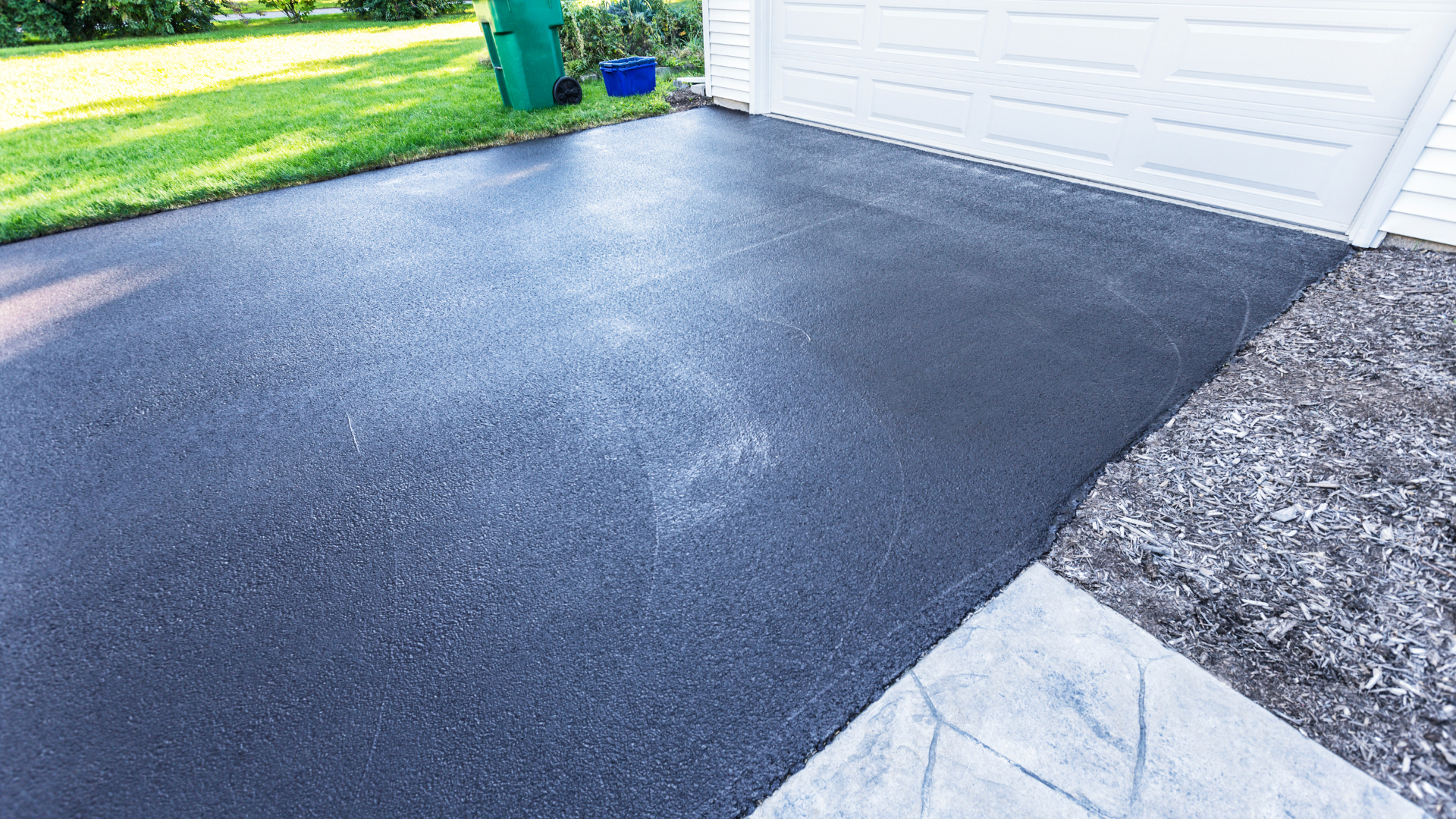
Resurfacing: A Fresh Layer Over a Sound Base
Resurfacing, often called an overlay, involves applying a new layer of asphalt directly over the existing surface. This is a more substantial intervention than sealcoating, addressing surface-level damage that sealcoating alone can't fix, without the cost and disruption of a full teardown.
What it fixes: Moderate cracking, surface wear, and an aged appearance, while effectively giving the pavement a fresh wearing layer. It's a practical way to extend the usable life of a lot or driveway when the underlying structure remains sound.
What it doesn't fix: Resurfacing assumes the base beneath the existing asphalt is still structurally stable. If the base has already failed, visible through extensive rutting, widespread alligator cracking, or persistent drainage problems, a topic covered in our article on signs a parking lot needs repaving rather than patching, simply placing a new layer over a compromised base will lead to the same problems reappearing, often within a year or two.
When it's the right call: The surface shows real wear or moderate cracking, but there's no sign of base failure, and the pavement hasn't already been resurfaced multiple times before, since each overlay adds height and eventually surface and drainage considerations limit how many times this approach can reasonably be repeated.
Full Repave: Starting From the Ground Up
A full repave involves removing the existing asphalt, and often a portion of the base material as well, before rebuilding the entire structure, including proper sub-base preparation, a step covered in depth in our article on why sub-base prep determines how long pavement lasts. This is the most involved and expensive of the three options, but it's also the only real solution when the underlying structure has failed.
What it fixes: Everything. Base failure, extensive and widespread cracking, chronic drainage problems, and a surface that's reached or exceeded its expected lifespan, a topic explored further in our article on what affects asphalt paving lifespan.
What it doesn't fix: Nothing is left unaddressed here, which is exactly why it's reserved for situations where lesser interventions genuinely won't hold.
When it's the right call: Your pavement shows widespread alligator cracking across a large portion of the surface, multiple potholes that keep reappearing in the same areas despite repair attempts, visible base failure, or persistent drainage issues that haven't improved despite previous repair efforts. It's also often the right call once a surface has already received one or more resurfacing overlays and is showing significant wear again.
A Simple Decision Framework
A few questions can help clarify which category your pavement actually falls into:
Is there any visible cracking, rutting, or potholes? If the answer is no, and the surface just looks faded or dry, sealcoating is likely sufficient.
Is the damage limited to the surface, or does it suggest base failure? Moderate cracking without rutting or recurring potholes often points to resurfacing. Rutting, recurring potholes in the same spots, or visible base movement point toward a full repave.
How much of the total surface is affected? Isolated issues across a small percentage of the lot can often be addressed with targeted patching or resurfacing. Widespread damage covering a large portion of the surface usually calls for full repaving.
Has this surface already been resurfaced before? A second or third overlay becomes less practical over time, both due to accumulating height and because repeated overlays over an aging base eventually hit diminishing returns.
What's the age of the pavement relative to its expected lifespan? A driveway or lot approaching or past the 15 to 20 year range, especially one that's never received any resurfacing along the way, is a stronger candidate for full repaving than for a lesser fix.
Common Mistakes Worth Avoiding
Sealcoating a surface that's already failing. This is one of the most common wasted expenses in pavement maintenance, applying a protective coating over cracks or early base damage doesn't resolve the underlying issue, it just delays recognizing it while the damage continues to spread beneath a fresh-looking surface.
Choosing a full repave when an overlay would work. On the opposite end, some property owners default to the most expensive option out of caution, without first getting an honest assessment of whether the existing base is actually still sound. When it is, a resurfacing overlay delivers most of the same visual and functional benefit at a meaningfully lower cost.
Treating resurfacing as a permanent fix for a failing base. An overlay only works when the base beneath it is structurally sound. Skipping that verification and resurfacing over a failing base simply delays, and in some cases accelerates, the eventual need for a full repave.
What About Concrete and Pavers?
Concrete follows a somewhat different maintenance path, periodic sealing protects against staining and moisture rather than UV-driven surface wear, while actual damage is addressed through crack repair, slab jacking for settlement, or full slab replacement for serious structural cracking, covered in our article on normal versus structural concrete driveway cracks. Concrete pavers offer their own advantage here, since individual damaged units can typically be lifted and replaced without needing anything resembling a full resurfacing or repave at all.
Let Pavetec Give You an Honest Assessment
Choosing between sealcoating, resurfacing, and a full repave comes down to an honest evaluation of what's actually happening beneath your pavement's surface, not just how it looks on top. At Pavetec, we assess Houston and Austin properties carefully and recommend the service that actually matches your pavement's condition, not the most expensive option by default.
📍 Proudly serving Houston & Austin, TX
Not sure which service your driveway or parking lot actually needs?
📞 Contact us at (832) 674-3996 or message us to schedule your free assessment.