
Asphalt vs. Concrete Parking Lots: Which Is Right for Your Business?
For most businesses, the parking lot is one of the largest capital expenses on the property, and it's also one of the first things customers see before they ever walk through the door. Choosing between asphalt and concrete for a commercial parking lot isn't just a materials decision, it's a decision that affects your upfront budget, ongoing maintenance costs, and how the lot performs under years of daily traffic.
Unlike a residential driveway, a commercial parking lot has to account for higher vehicle volume, mixed traffic types, and often a longer expected lifespan before the property owner is willing to revisit the investment. Here's how asphalt and concrete compare across the factors that matter most to business owners making this decision.
Upfront Cost at Commercial Scale
Cost differences between asphalt and concrete become more significant at the scale of a commercial parking lot compared to a single residential driveway. Asphalt generally costs less per square foot to install, which matters considerably when you're paving tens of thousands of square feet rather than a few hundred. For businesses working with a defined construction budget, particularly for a large lot, asphalt's lower upfront cost is often the deciding factor that makes the project financially feasible in the first place.
Concrete carries a higher upfront cost per square foot, but that cost needs to be weighed against its longer expected lifespan and lower long-term maintenance needs, a trade-off worth running through a full lifecycle cost comparison rather than judging on installation price alone.
Installation Time and Business Downtime
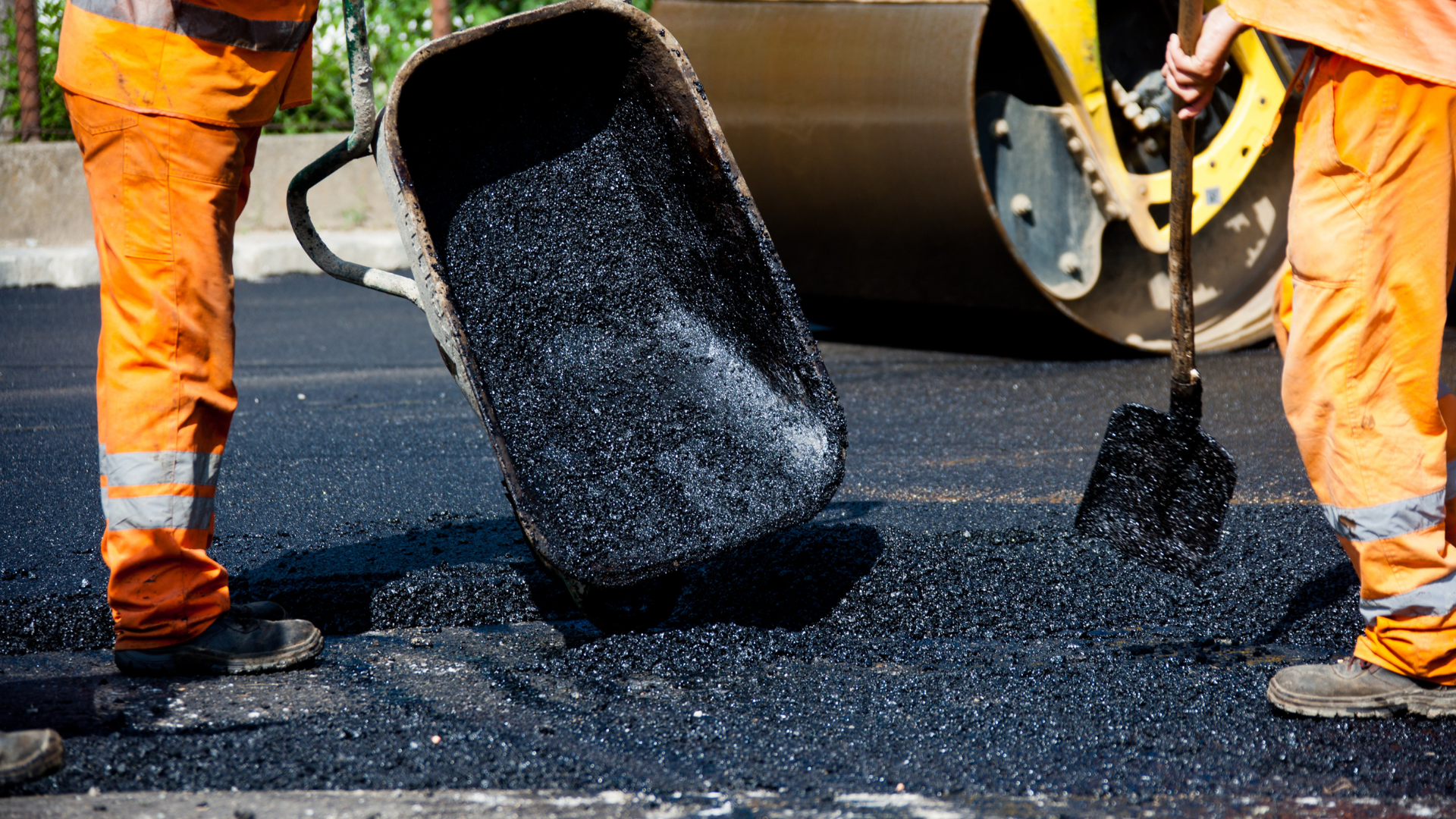
For an active business, the amount of time a parking lot is out of commission during installation or repaving directly affects revenue, especially for retail, restaurants, or any location dependent on walk-in customers. Asphalt generally installs faster than concrete and requires a shorter curing period before it can handle vehicle traffic, which can meaningfully reduce the disruption to daily operations.
Concrete requires a longer curing timeline before it reaches full driving strength, generally in the range of a full week before regular traffic and closer to a month before reaching complete design strength, timing that needs to be planned around carefully for a business that can't afford an extended closure. Phased construction, completing sections of the lot at a time so part of it remains usable, is a common strategy for businesses that can't tolerate a full closure during either material's installation.
Load and Traffic Considerations
Not all parking lot traffic is the same, and the mix of vehicle types using your lot should influence the material decision. Standard passenger vehicle traffic, the majority of what most retail or office parking lots experience, is well within asphalt's capabilities when properly installed and maintained.
However, areas that see concentrated heavy loads, delivery truck zones, loading docks, drive-thru lanes, or areas where vehicles sit stationary for extended periods, put more stress on the surface than typical parking spaces. Concrete generally holds up better under these conditions, since it resists the rutting and surface deformation that can occur when asphalt is exposed to heavy, repeated, or static loads, particularly during intense Texas heat when asphalt naturally softens.
This is exactly why many commercial properties don't choose a single material for the entire lot, opting instead for asphalt across the main parking area and concrete specifically at loading docks, dumpster pads, and other high-load zones, a strategy covered in more detail in our article on commercial concrete services for business owners.
Durability in Texas Heat and Soil Conditions
Both materials face real challenges from Texas's climate and soil, but they respond differently. Asphalt's dark surface absorbs significant heat and can soften slightly during peak summer temperatures, which increases the risk of rutting in high-traffic lanes or areas where vehicles regularly park in the same spot. Concrete holds its shape better under extreme heat, though it's more rigid overall, which means proper sub-base preparation is critical given the region's expansive clay soil, a topic explored in depth in our article on Texas heat, clay soil, and concrete installation.
For a parking lot spanning a large area, inconsistent soil conditions across the site can affect different sections differently, making thorough site evaluation and proper base preparation especially important regardless of which material you choose.
Long-Term Maintenance and Cost of Ownership
Asphalt parking lots require a more active maintenance schedule to reach their full expected lifespan. Sealcoating every two to three years protects against UV damage and oxidation, and cracks need to be filled promptly to prevent water infiltration and pothole formation. Skipping this maintenance significantly shortens asphalt's usable life and can lead to more extensive, costly repairs later.
Concrete requires comparatively less frequent maintenance, mainly periodic joint sealing and occasional crack repair, and holds up longer between major interventions. For businesses budgeting facilities maintenance on an annual basis, asphalt's lower upfront cost needs to be weighed against a more consistent recurring maintenance line item compared to concrete's lower ongoing costs paired with a higher initial investment.
Drainage and Stormwater Management
Large parking lots represent a significant amount of impervious surface, which means drainage and stormwater management are important considerations for both materials, and often subject to specific municipal requirements in Houston and Austin. Proper grading and drainage design matter regardless of material choice, though some businesses incorporate permeable concrete pavers in landscaped islands, walkways, or overflow parking areas to help manage stormwater runoff while still meeting parking capacity needs.
Appearance and Brand Impression
For customer-facing businesses, a parking lot's appearance contributes to the overall impression a property makes. Concrete offers a cleaner, brighter surface that can complement a more upscale or modern storefront, and its lighter color also improves nighttime visibility under parking lot lighting. Asphalt's dark, uniform surface provides strong contrast for pavement striping and is a practical, familiar look for the vast majority of commercial properties, particularly larger retail centers and industrial sites where budget and function outweigh aesthetic differentiation.
ADA Compliance Considerations
Regardless of which material you choose, every commercial parking lot with public access needs to meet ADA requirements for accessible parking spaces, curb ramps, and route continuity to building entrances, details covered more fully in our article on commercial concrete services. Accessible spaces and routes are sometimes constructed in concrete even within an otherwise asphalt lot, since the flatter, more consistent surface can make it easier to maintain precise slope requirements over time.
A Practical Decision Framework
A few questions can help clarify which material, or combination of materials, makes the most sense for your business:
Do you own or lease the property, and for how long? A shorter lease term may favor asphalt's lower upfront cost, while long-term property ownership can make concrete's higher initial investment pay off over its longer lifespan.
What's your realistic maintenance budget going forward? If ongoing sealcoating and crack repair aren't likely to happen on schedule, concrete's lower maintenance demands may be the more reliable long-term choice.
Where does your heaviest traffic concentrate? Standard parking areas can generally perform well with asphalt, while loading docks, drive-thru lanes, and high-idle zones benefit from concrete's load resistance.
How much downtime can your business absorb during installation? If minimizing closure time is critical, asphalt's faster installation and shorter cure time may outweigh other factors.
Let Pavetec Help You Plan Your Commercial Lot
The right choice between asphalt and concrete often isn't all-or-nothing, it's about matching each material to the specific demands of different areas across your property. At Pavetec, we help Houston and Austin business owners evaluate traffic patterns, budget considerations, and site conditions to design a parking lot solution, whether asphalt, concrete, or a combination of both, built to perform for your business long-term.
📍 Proudly serving Houston & Austin, TX
Planning a new parking lot or considering a repaving project for your business?
📞 Call us at (832) 674-3996 or message us to schedule your free consultation.