
PaveTec's Quality Standards: How We Mix, Pour & Finish
From the street, most finished driveways look fairly similar. The real difference between a surface that lasts decades and one that cracks within a few years almost always comes down to what happens before, during, and immediately after the pour, details a homeowner rarely sees but that determine everything about how the finished product performs over time.
We get asked fairly often what actually separates a quality concrete job from a rushed one, so we wanted to walk through our own process in detail: how we approach mix design, pouring technique, and finishing, and why each of these steps matters as much as the material itself.
The Mix: Getting the Foundation of the Foundation Right
Every concrete project starts with the mix, and getting this step right sets the ceiling for how strong and durable the finished surface will ultimately be.
PSI ratings matched to the project. Concrete strength is measured in pounds per square inch, or PSI, and different applications call for different strength specifications. A residential driveway needs a higher PSI rating than a decorative walkway due to vehicle load, while commercial areas like loading docks or drive lanes often require an even higher specification to handle heavier, more concentrated loads. We match the mix design to the specific application rather than defaulting to a single mix across every project type.
Controlled water-cement ratio. Adding extra water to a concrete mix makes it easier and faster to pour, but it significantly weakens the final cured strength. This is one of the most common shortcuts in lower-quality concrete work, and it's also one of the hardest for a homeowner to detect just by looking at the finished surface. We control water content carefully during batching and avoid the practice of diluting mix on-site to speed up placement.
Batch testing for consistency. We perform slump tests to verify that each batch of concrete meets the correct consistency before it's placed. This matters because a batch that's too wet or too dry from load to load can create weak spots or inconsistent curing across a single project.
Air entrainment for durability. Properly entrained air in the concrete mix improves resistance to weathering and helps the material handle temperature fluctuations over its lifespan, an important consideration even in a warm climate like Texas, where the material still experiences seasonal expansion and contraction.
The Pour: Where Technique Meets Timing
A well-designed mix can still result in a weak or short-lived surface if the pour itself isn't handled correctly.
Verifying site prep before the truck arrives. Before any concrete is placed, we confirm that sub-base compaction, grading, forms, and reinforcement placement all meet our standards. Skipping this verification step is one of the most common ways lower-quality contractors save time at the expense of long-term durability, particularly given how much Texas's expansive clay soil depends on proper sub-base preparation.
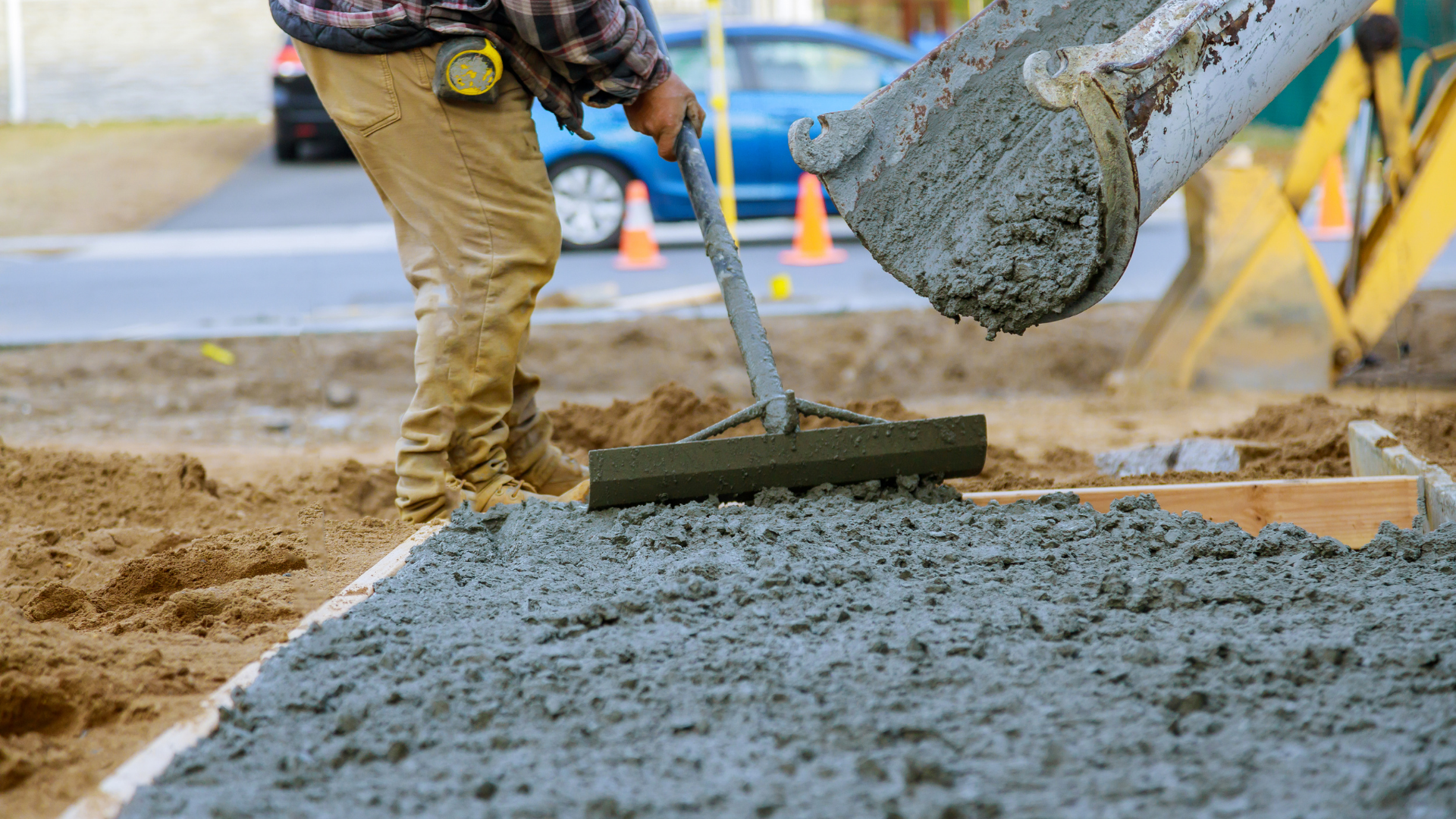
Weather-conscious scheduling. We monitor temperature and forecasted conditions closely, especially during Texas summers, and typically schedule pours for early morning to avoid placing concrete during peak heat, which can cause the surface to dry too quickly and lead to cracking. If unfavorable weather is forecasted, we'd rather adjust the schedule than rush a pour that's likely to underperform.
Consistent placement and vibration. Our crews work to place concrete at a controlled, even pace and use proper vibration techniques to eliminate trapped air pockets within the mix, which can otherwise create weak points and voids beneath the surface that aren't visible until problems appear later.
Avoiding cold joints. When concrete is poured too slowly or in stages without proper technique, it can create a visible seam, called a cold joint, where two sections don't bond properly. We coordinate our crew and pour rate specifically to avoid this issue on continuous pours.
The Finish: Where Durability Meets Craftsmanship
Finishing is often where the visual character of a project comes together, but it also plays a direct role in the concrete's long-term performance.
Correct finishing timing. Finishing concrete too early, before bleed water has properly evaporated from the surface, can trap moisture beneath the finished layer and lead to surface defects like scaling or delamination. Our crews are trained to wait for the right window before floating and troweling, rather than rushing to move on to the next project.
Properly placed and timed control joints. Control joints need to be cut at a specific depth and spacing, and within a specific timeframe after finishing, to effectively guide shrinkage cracking to controlled locations rather than allowing random cracking to appear across the surface. We follow industry-standard spacing guidelines adjusted for slab thickness and application.
Finish selection executed to standard. Whether a project calls for a simple broom finish, a stamped decorative pattern, or a prepared surface for staining, each technique has its own specific process and timing requirements to achieve both the intended look and proper surface durability, particularly important for slip resistance on driveways and pool decks.
Active curing management. Immediately after finishing, we apply the appropriate curing method, whether that's a curing compound, moisture retention technique, or covering, particularly critical in Texas heat where an unmanaged cure can lead to rapid surface drying and cracking within the first 24 to 48 hours. This is also where we communicate clearly with clients about what to expect and avoid during the curing period.
Quality Control at Every Stage
Rather than relying on a single inspection at the end of a project, we build verification checkpoints throughout the process: confirming sub-base compaction before forms are set, verifying reinforcement placement and coverage before the pour, checking mix consistency during placement, and reviewing the finished surface with the client during a final walkthrough. Catching an issue at any of these stages is far less costly, and far less disruptive, than discovering a problem after the concrete has fully cured.
Standards We Follow
Our processes are built around established concrete industry standards, including American Concrete Institute guidelines for mix design, placement, and curing, along with local building code requirements specific to Houston and Austin. Our crews are trained specifically on these standards rather than relying solely on general experience, which matters given how much local soil and climate conditions affect proper technique in this region.
The Same Standards Apply to Pavers and Asphalt
Quality control isn't unique to poured concrete in our process. Concrete paver installations follow the same rigorous approach to base compaction and proper edge restraint installation, which prevents the shifting and unevenness that occurs when pavers are installed over an inadequately prepared base. Asphalt paving projects receive the same attention to base preparation, proper compaction temperature, and lift thickness, all of which directly affect how well an asphalt surface resists rutting and cracking under Texas heat and traffic.
Why This Level of Detail Matters
Every step outlined here connects directly to how long your driveway, patio, or commercial surface actually lasts. Cutting corners at any single stage, mix design, pour technique, or finishing, can undermine the benefits of doing everything else correctly, which is exactly why we treat quality control as a process built into every stage rather than a single final inspection.
Experience Pavetec's Standards for Yourself
Quality concrete work isn't about any single step, it's about consistently getting every stage right, from the mix truck to the final cure. At Pavetec, we're happy to walk you through our specific process for your project, and we back our work with a warranty that reflects the confidence we have in how it's built.
📍 Proudly serving Houston & Austin, TX
Ready to see the difference a detail-focused process makes?
📞 Contact us at (832) 674-3996 or message us to schedule your free consultation.