
Commercial Concrete Services: What Business Owners Need to Know
Commercial concrete projects operate on a different scale than a residential driveway or backyard patio, and the stakes are different too. A parking lot or loading dock isn't just a surface, it's infrastructure that supports daily business operations, customer experience, and in many cases, legal compliance requirements that simply don't apply to a homeowner's driveway.
Whether you're planning a new parking lot, repairing a cracked loading dock, or updating a storefront walkway, understanding what makes commercial concrete work different from residential projects helps you plan a smoother process, avoid costly compliance issues, and choose the right materials and contractor for the job.
How Commercial Concrete Differs From Residential Work
Load requirements are significantly higher. Commercial surfaces regularly support delivery trucks, forklifts, dumpsters, and heavy equipment, loads far beyond what a typical residential driveway is designed to handle. This means thicker slabs, different reinforcement specifications, and often a different concrete mix design entirely.
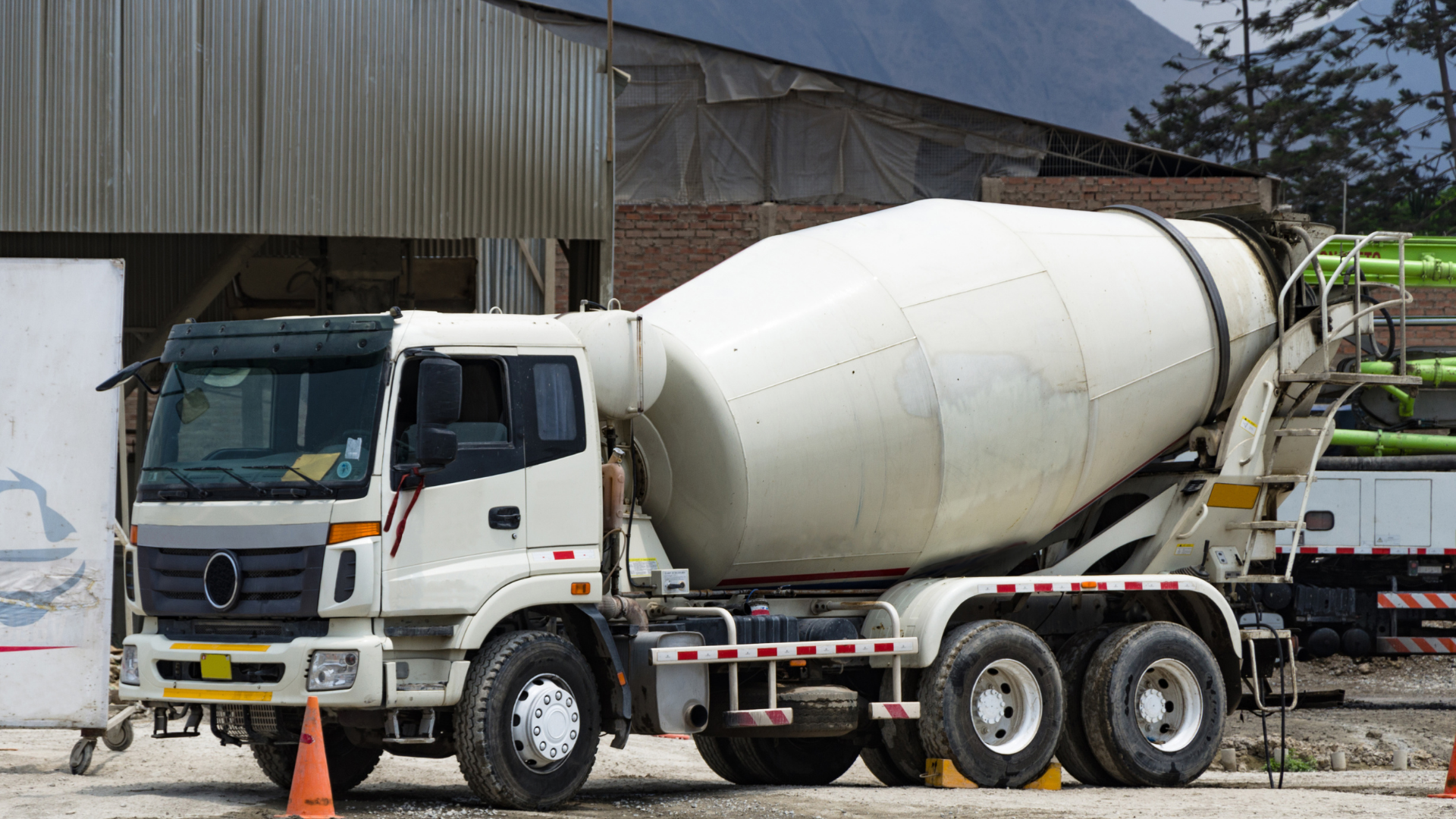
Traffic volume and wear are constant. A retail parking lot or warehouse floor sees daily, high-frequency use rather than the occasional vehicle a residential driveway handles, which accelerates wear and requires materials and installation methods built for durability under sustained use.
Code compliance is more complex. Commercial projects are typically subject to more detailed building codes, accessibility requirements, and often require engineering review or stamped plans for larger projects, none of which usually applies to a standard residential pour.
Downtime has a real cost. Unlike a homeowner who can simply avoid a driveway for a few days, a business often can't afford to close a parking lot, loading area, or entrance walkway for an extended period without impacting revenue, which makes project timing and phasing a much bigger consideration.
Common Commercial Concrete and Paving Applications
Parking lots and drive lanes. Often the largest surface area in a commercial project, parking lots need to balance cost-effective installation with long-term durability under constant vehicle traffic.
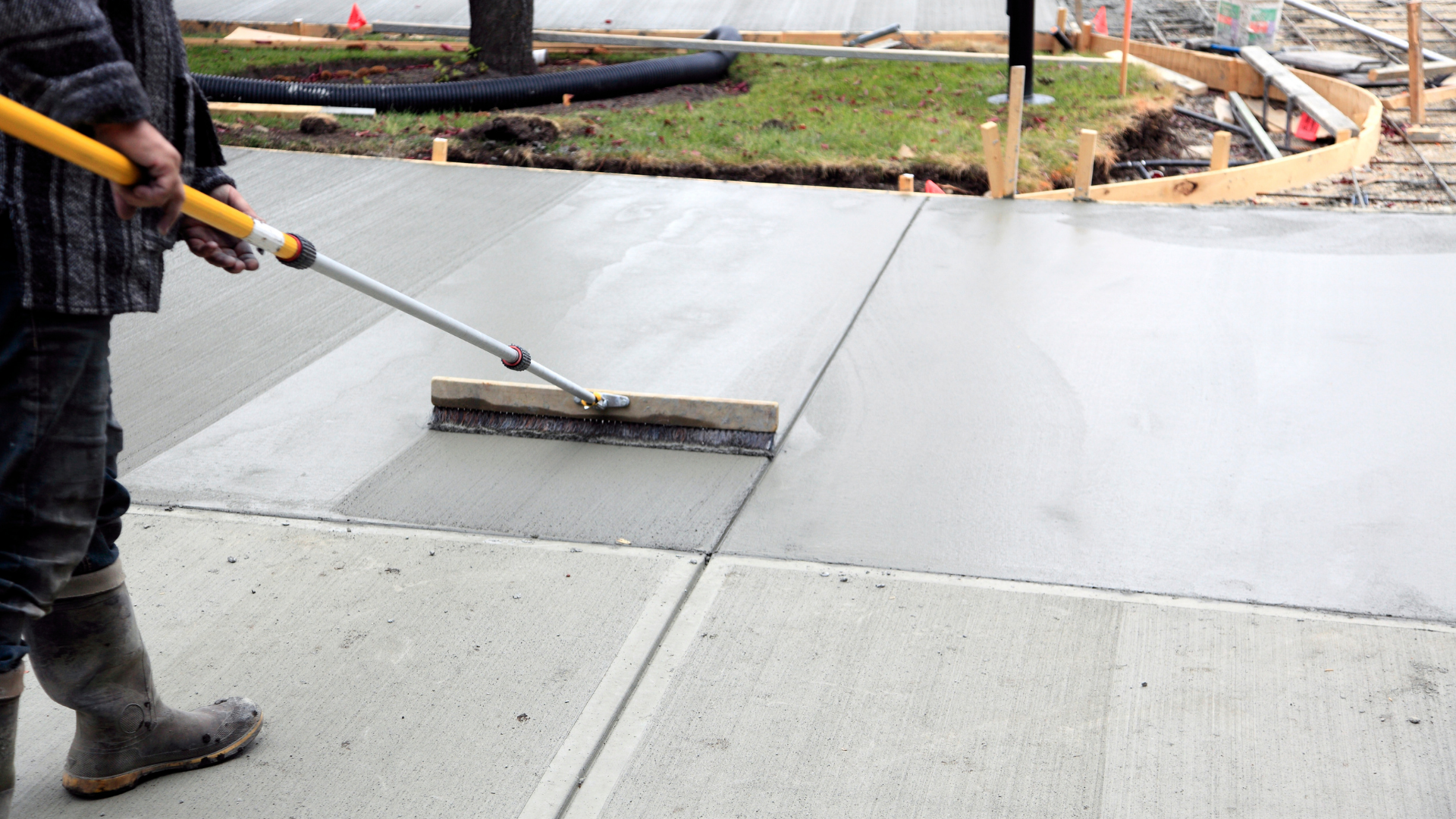
Loading docks and truck aprons. These areas experience concentrated, heavy static and dynamic loads from trucks and equipment, requiring a more robust concrete specification than surrounding parking areas.
Warehouse and industrial floor slabs.Interior commercial flooring often needs to support forklift traffic, heavy racking systems, and sometimes specific flatness tolerances for automated equipment, making this one of the more specialized areas of commercial concrete work.
Sidewalks, storefront walkways, and plazas. These customer-facing surfaces often carry more design consideration than purely functional areas, since they contribute directly to a business's curb appeal and first impression.
ADA-compliant ramps and curb cuts. Every commercial property with public access needs to meet accessibility requirements, an area where compliance isn't optional and errors can create real liability exposure.
Choosing Between Concrete, Asphalt, and Pavers for Commercial Projects
The right material often varies by application area within the same commercial property, rather than a single material serving the entire project.
Asphalt is frequently the practical choice for large parking lots and drive lanes, since it offers a lower upfront cost per square foot for large surface areas and a faster installation timeline, which helps minimize business disruption during construction. Regular sealcoating and a proactive maintenance schedule are important to maximizing its lifespan under commercial traffic.
Concrete tends to be the stronger choice for high-load, high-stress areas like loading docks, dumpster pads, drive-thru lanes, and truck aprons, where its higher load-bearing capacity and resistance to rutting under concentrated static loads outweigh its higher upfront cost. Concrete also holds up better in areas with frequent oil, fuel, or chemical exposure common in industrial settings.
Concrete pavers are a popular choice for storefront plazas, outdoor dining areas, and pedestrian walkways where aesthetics and brand image matter as much as function. Pavers also offer a practical maintenance advantage for businesses, since damaged sections can be repaired individually without disrupting the entire surface or requiring a full closure.
Many commercial properties end up using a combination of all three, asphalt for the main parking lot, concrete for loading and high-load zones, and pavers for customer-facing entrances, matching each material to the demands of that specific area.
ADA Compliance: A Non-Negotiable Requirement
Accessibility compliance is one of the most important, and most commonly overlooked, aspects of commercial concrete and paving projects. Key requirements typically include:
Accessible parking space dimensions and quantities, based on total lot size and required by both federal ADA guidelines and often local code
Curb ramps and detectable warning surfacesat every point where a pedestrian route crosses a vehicle path
Maximum slope requirementsfor ramps and accessible routes, which must be verified during both design and final installation
Route continuity, ensuring accessible paths connect logically from parking areas to building entrances without unexpected obstacles or grade changes
Getting these details wrong isn't just a compliance issue, it can create real legal and liability exposure for a business. Working with a contractor experienced in commercial ADA requirements from the design phase forward is one of the most important decisions in any commercial concrete project.
Minimizing Downtime During Construction
Because commercial concrete work often affects active business operations, planning around downtime is a critical part of the process. A few strategies experienced commercial contractors typically use include:
Phased construction, completing sections of a parking lot or walkway at a time so at least part of the property remains accessible throughout the project
Off-hours scheduling, timing pours or major work during evenings, weekends, or slower business periods to reduce customer and operational impact
Temporary access planning, including clear signage and alternate routes to keep customers and deliveries flowing during construction
Discussing these options upfront with your contractor, before a project timeline is finalized, gives you far more control over how much disruption your business experiences.
Permitting and Code Compliance for Commercial Projects
Commercial concrete and paving work in Houston and Austin typically involves a more involved permitting process than residential projects, often requiring site plan review, drainage analysis, and in some cases, engineering-stamped plans for larger installations. Requirements can vary depending on the size of the project, the property's zoning, and whether the work affects impervious cover calculations or stormwater management requirements.
Working with a contractor experienced in local commercial permitting helps avoid the delays that come from incomplete applications or overlooked code requirements, which can otherwise add weeks or months to a project timeline.
Planning for Long-Term Maintenance
Commercial surfaces benefit significantly from a proactive maintenance plan rather than a reactive, repair-when-broken approach. For asphalt parking lots, this typically includes regular sealcoating, prompt crack filling, and periodic restriping. Concrete areas benefit from routine joint sealing and periodic inspection for early-stage cracking, particularly in high-load zones. Building a maintenance schedule into your annual facilities budget helps extend the lifespan of your investment and avoid the higher cost of major repairs down the line.
Choosing the Right Commercial Contractor
Not every concrete contractor has the experience, equipment, or licensing needed for commercial-scale projects. When evaluating a contractor for commercial work, it's worth confirming:
Experience with commercial-scale and multi-phase projects, not just residential driveways and patios
Proper insurance and bonding, which is often required for commercial contracts and protects your business throughout the project
A track record with local commercial permitting, since familiarity with Houston and Austin's specific requirements can meaningfully speed up the approval process
References from other commercial clients, ideally in a similar industry or property type to your own
Partner With Pavetec for Your Commercial Project
From parking lots and loading docks to storefront walkways and ADA-compliant access routes, commercial concrete and paving projects require a level of planning, compliance knowledge, and durability that goes well beyond residential work. At Pavetec, we work with business owners across Houston and Austin to plan, permit, and install commercial concrete, asphalt, and paver solutions built for long-term performance and minimal disruption to daily operations.
📍 Proudly serving Houston & Austin, TX
Planning a commercial concrete or paving project for your business?
📞 Contact us at (832) 674-3996 or message us to schedule your free consultation.