
Concrete Driveway Cracks: Normal Wear vs. Structural Problem
Almost every concrete driveway develops cracks at some point, and that alone isn't cause for panic. Concrete is a rigid material that naturally develops small cracks as part of its normal curing and aging process. The real question isn't whether your driveway has cracks, it's whether those cracks are cosmetic or a sign of something more serious happening beneath the surface.
This guide walks through the different types of driveway cracks, how to assess their severity yourself, and when a crack that looked minor actually warrants a professional evaluation.
Why Concrete Cracks in the First Place
Concrete cracks because of a basic property of the material itself: as it cures, water within the mix evaporates and the concrete shrinks slightly. This shrinkage creates internal stress, and since concrete has very little flexibility, that stress needs to release somewhere, usually as a crack. This is a completely normal part of how concrete behaves, which is why contractors install control joints, intentional grooves cut into the surface, to guide where that shrinkage cracking happens rather than leaving it to occur randomly.
Beyond shrinkage, cracks can also form due to soil movement, overloading, tree root growth, or inadequate installation, and each cause tends to produce a slightly different crack pattern.
The Five Common Types of Driveway Cracks
Shrinkage cracks are thin, hairline cracks that typically appear within the first few weeks after a new pour. They often run in relatively straight lines, sometimes following the same direction as nearby control joints, and rarely indicate a structural problem. These are the most common type of driveway crack and are generally considered a normal part of concrete curing.
Settlement cracks develop when the soil beneath a section of the driveway compacts or shifts unevenly, causing that section to sink slightly relative to the surrounding concrete. These cracks can range from minor and stable to a sign of a larger drainage or soil issue, particularly in areas with Texas's expansive clay soil.
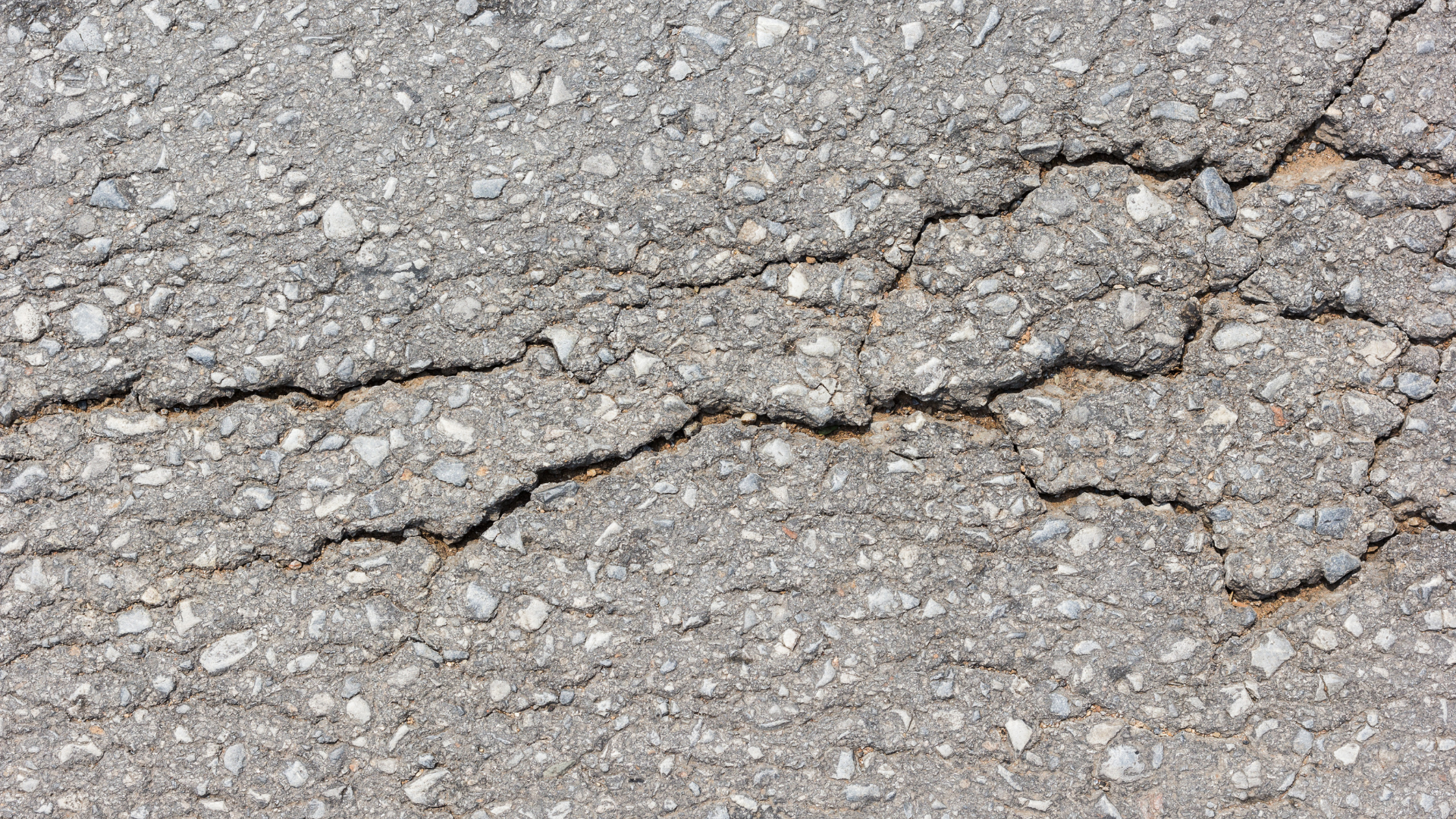
Heaving cracks occur when soil beneath the slab swells and pushes upward, a pattern especially common in Texas due to clay soil's dramatic reaction to moisture changes. Unlike settlement cracks, which involve sinking, heaving cracks often create a noticeable upward bump or ridge along the crack line.
Structural or stress cracks form when a section of concrete is subjected to more load than it was designed to handle, such as a heavy truck, RV, or delivery vehicle regularly parking on a residential driveway not built for that weight class. These cracks tend to be wider, more irregular, and more likely to worsen over time without intervention.
Tree root cracks happen when roots from nearby trees grow beneath the slab and physically push sections of concrete upward or apart. These often appear as a long crack running roughly parallel to a nearby tree, sometimes paired with visible surface heaving directly above the root path.
How to Assess Crack Severity Yourself
Before deciding whether a crack needs professional attention, a few simple checks can help you gauge severity:
The width test. Hairline cracks under about one-eighth of an inch are generally considered cosmetic and low-risk. Cracks between one-eighth and one-quarter inch are worth monitoring over the next few months. Cracks wider than one-quarter inch typically warrant a professional evaluation, particularly if they continue to widen.
The offset test. This is arguably more important than width alone. If one side of a crack sits noticeably higher or lower than the other, even by a small amount, it indicates the slab sections are moving independently, which is a structural concern regardless of how narrow the crack itself appears. A vertical offset is also a tripping hazard that should be addressed for safety reasons even if the underlying cause turns out to be minor.
The pattern test. Cracks that form a fine, web-like or map-like pattern across the surface are typically shrinkage-related and cosmetic. A single crack running diagonally across a large section, cutting across control joints rather than following them, or tracking directly from the driveway toward the home's foundation is more likely to indicate settlement or structural movement worth investigating further.
The movement test. Track a crack's size over a few months, a simple photo taken periodically works well for this. A crack that stays the same size is generally stable. One that visibly widens, lengthens, or develops new offset over time indicates an active, ongoing issue rather than a one-time cosmetic occurrence.
When a Cosmetic Crack Still Needs Attention
Even a hairline, structurally minor crack isn't necessarily something to ignore indefinitely. Cracks of any size create an entry point for water, and in Texas, where sudden heavy rainfall is common, that water can work its way beneath the slab and gradually contribute to a bigger settlement issue over time. Sealing minor cracks with an appropriate concrete crack filler is a low-cost, proactive step that helps prevent a cosmetic issue from developing into a structural one down the line.
When to Call a Professional Right Away
Certain signs suggest it's time to skip the DIY approach and bring in a concrete contractor for an evaluation:
A crack wider than one-quarter inch, or one that continues to widen over time
Any noticeable vertical offset between the two sides of a crack
Multiple large cracks appearing across the same driveway within a short period
Cracks appearing alongside other warning signs, such as pooling water, sunken sections, or foundation cracks nearby, patterns covered in more detail in our article on driveway and foundation warning signs
A crack that appeared suddenly rather than developing gradually, which can indicate a more acute cause like a plumbing leak or significant soil event
Repair Options Based on Severity
Crack sealing or caulking works well for narrow, stable, cosmetic cracks, primarily to prevent water infiltration rather than to address any structural concern.
Routing and filling involves widening a crack slightly with a saw before filling it with a more durable sealant, typically used for cracks that are stable but slightly larger than hairline size.
Slab jacking or polyurethane foam injection addresses settlement-related unevenness by lifting a sunken section back into place, often avoiding the need for full slab replacement.
Panel or slab replacement becomes necessary when a section of driveway has significant structural cracking, multiple large cracks, or has been compromised by root damage beyond what repair methods can reasonably address.
Cost generally scales with the severity of the issue, which is exactly why catching and addressing cracks early, while they're still cosmetic or moderate, tends to be significantly less expensive than waiting until a full section needs replacement.
How This Compares to Asphalt and Pavers
Asphalt driveways develop their own version of this issue, most commonly seen as alligator cracking, a web of interconnected cracks that typically indicates the base beneath the asphalt has weakened. Like concrete, minor asphalt cracking can often be addressed with sealing, while more extensive alligator cracking usually points to a deeper structural or drainage issue.
Concrete pavers offer a practical advantage when cracking does occur, since individual damaged pavers can typically be lifted and replaced without needing to repair or replace an entire surface, unlike a single poured concrete slab where a structural crack often requires addressing a larger connected section.
Preventing Future Cracking
Avoid parking heavy vehicles, such as RVs, box trucks, or equipment trailers, on a standard residential driveway not designed for that load class
Keep trees a reasonable distance from driveway edges, or discuss root barrier options with a contractor if mature trees are already nearby
Ensure proper drainage so water doesn't pool against or beneath the slab, which can accelerate both settlement and heaving over time
Choose a contractor who installs properly spaced control joints and follows sub-base preparation practices suited to local soil conditions
Let Pavetec Help You Assess Your Driveway
Not every crack means a major repair is coming, but knowing the difference between normal wear and an early structural warning sign can save you significant time and money. At Pavetec, we provide honest, straightforward driveway crack evaluations and the right repair solution for whatever we find, whether that's a simple seal or a full slab replacement.
📍 Proudly serving Houston & Austin, TX
Not sure if that crack in your driveway is something to worry about?
📞 Contact us at (832) 674-3996 or message us for a free crack evaluation.