
Anyone who has lived in Texas knows how quickly a cold front can change the day. A warm, humid afternoon can turn into a windy, near-freezing night in a matter of hours. For people planning a concrete pour, that kind of swing is more than an inconvenience. Fresh concrete is at its most vulnerable in its first hours and days, and a fast-moving front can arrive at exactly the wrong time.
This guide explains what a cold front actually does to fresh concrete, why the problems often show up weeks later, and what contractors and property owners can do to protect a new driveway, patio, or slab when one is on the way.
What Makes a Texas Cold Front Different
A cold front isn't just cooler weather. It usually brings several changes at once, and each one affects concrete in its own way.
A sharp temperature drop. Temperatures can fall many degrees in a short time, sometimes right as a slab is being finished.
Strong, gusty winds. Fronts are often preceded and followed by stiff north winds that pull moisture off the surface of fresh concrete.
Drier air. The air behind a front is typically much drier than the humid air before it, which speeds up surface evaporation.
Rain along the leading edge. Many fronts arrive with a band of rain or storms, which can hit a freshly poured slab just as it's most exposed.
Clear, cold nights afterward. Skies often clear after the front passes, letting overnight temperatures fall further.
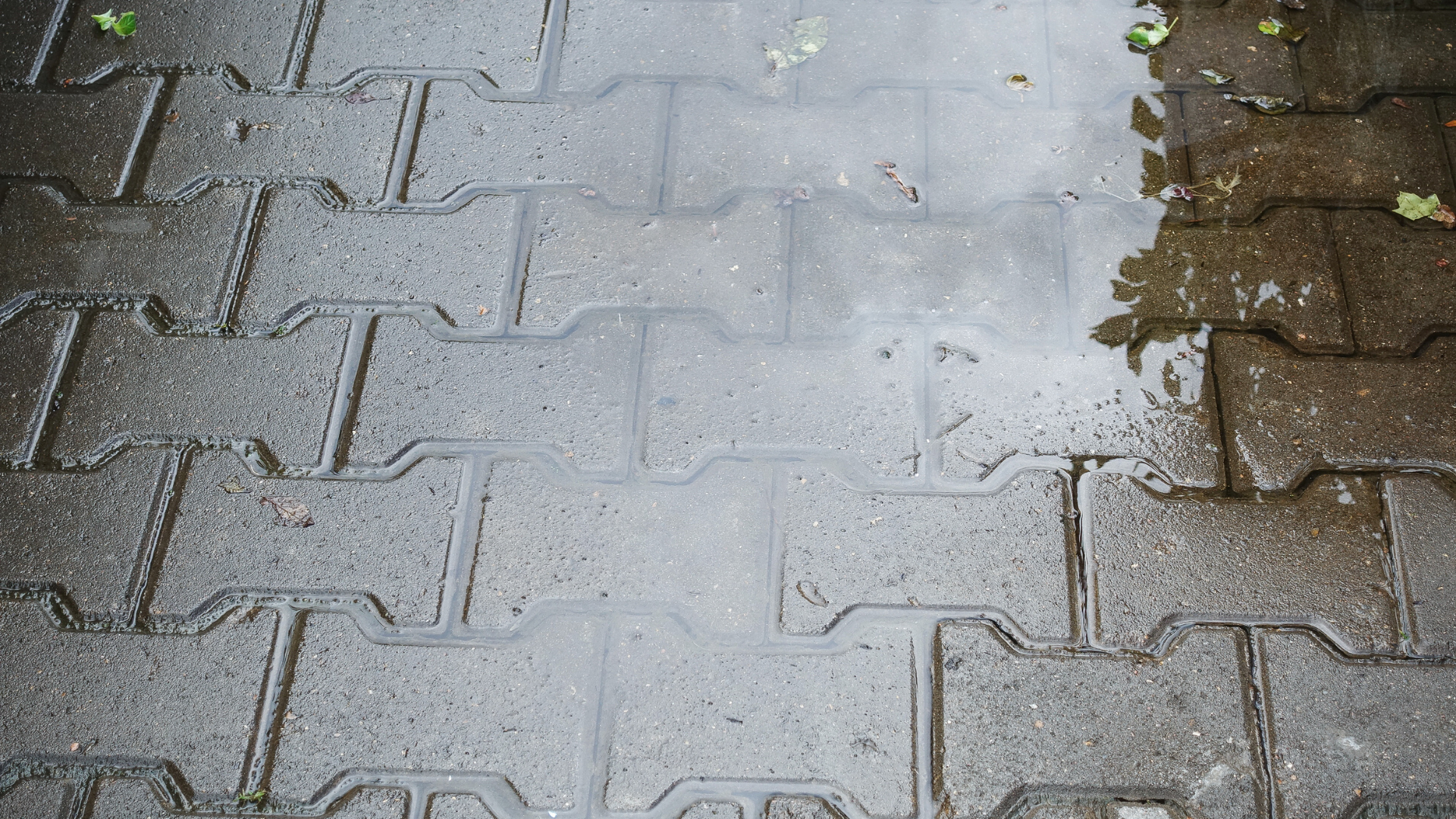
The combination is what makes fronts tricky. A crew that plans for cold alone, or for wind alone, can still be caught off guard.
The Biggest Risk: Freezing Too Early
Concrete contains a lot of water in its first hours, and it hasn't yet built strength. If that water freezes before the concrete reaches adequate early strength, ice crystals can disrupt the structure and permanently reduce its quality.
Guidance on cold weather concreting from the American Concrete Institute is centered on avoiding this early-age freezing damage and maintaining proper curing conditions. For Texas owners, the takeaway is practical: the overnight low after a pour matters at least as much as the daytime high.
Because Texas winters are mild, freezing is less common than in northern states. That's exactly why a surprise front can do damage. A crew used to warm conditions may not have blankets, heaters, or an adjusted mix ready when temperatures suddenly dive.
Wind and Dry Air: The Hidden Problem
Many people assume cold fronts are only a freezing issue. In reality, wind and dry air can cause trouble even when the temperature stays above freezing.
When wind and low humidity pull moisture off the surface faster than bleed water rises, the top layer can dry out too quickly. This leads to plastic shrinkage cracking, a network of fine cracks that can appear within hours of finishing. It's the same mechanism that makes summer pours difficult, which our article on Texas heat, clay soil, and concrete installation explains in detail. The difference is that a cold-front day can feel comfortable to the crew while still being harsh on the slab.
Surface drying can also cause crusting, where the top skin sets while the concrete below is still workable. That makes finishing harder and can lead to a weaker, flaky surface later.
Slower Strength Gain After the Front
Once the cold air settles in, concrete gains strength more slowly. The chemical reaction that hardens concrete slows as temperatures fall, which has several practical effects.
Finishing gets pushed back. Surfaces take longer to reach the point where they can be troweled or broomed.
Sawing and joint cutting may be delayed. Control joints need cutting within a window, and cold can complicate timing.
Traffic is allowed later. The standard timeline in our article on how long concrete takes to cure can stretch in cool conditions.
Sealing may need to wait. Sealers and curing compounds have their own temperature limits.
Slower strength gain isn't a defect, but it does require patience and good protection.
Rain Ahead of the Front
Rain at the leading edge of a front is a separate risk. Rain on an unfinished or freshly finished surface can wash away fine material, pit the top layer, and weaken the finish. Our article on how weather delays affect paving timelines in Texas explains why a short delay is often the better choice when rain is in the forecast.
What Contractors Do When a Front Is Coming
Experienced crews don't treat a front as a surprise. They watch forecasts closely, including the National Weather Service forecasts for Houston and Galveston and Austin and San Antonio, and adjust as the timing becomes clear.
Common responses include:
Rescheduling the pour. If a hard front is arriving within a day or two, moving the date is often the simplest and safest option.
Pouring earlier in the day. An early start gives concrete more warm hours to gain strength before the temperature drop.
Adjusting the mix. Mix designs can be modified to help concrete gain early strength in cooler conditions.
Using windbreaks. Barriers can reduce the drying effect of gusty winds across the surface.
Applying curing compound promptly. Sealing in moisture helps prevent plastic shrinkage cracking.
Covering with insulating blankets. Blankets hold in heat from hydration and shield the slab from overnight cold.
Checking the ground. Cold or frozen sub-base can pull heat from the slab, so proper preparation matters, as covered in our article on why sub-base prep determines how long pavement lasts.
What Property Owners Can Do
If you've just had concrete poured and a front is on the way, a few steps help.
Ask your contractor about their plan. Find out whether protection is already arranged.
Keep traffic off the slab. Foot traffic, pets, and vehicles can damage a soft surface, and cold makes that surface stay soft longer.
Don't remove protective covers early. Blankets or plastic should stay until the contractor says it's safe.
Avoid sprinklers and hoses near the slab. Standing or splashed water can freeze and damage the surface.
Skip de-icing products. These can harm young concrete.
Watch for early cracks. If you notice fine cracking in the first days, tell your contractor right away rather than waiting.
Our guide to questions to ask before hiring a concrete contractor includes weather protocols you can ask about before the work starts.
Do Cold Fronts Affect Asphalt and Pavers Too?
Yes, in different ways. Asphalt cools faster in cold, windy conditions, which can make proper compaction harder, so timing matters for asphalt paving when a front is approaching. Concrete pavers are more forgiving because there's no curing clock, though wet or frozen ground can delay base work. Our article on paving in cool weather covers how each material responds to cooler conditions.
When Damage Shows Up Later
One challenge with cold-weather damage is that it isn't always visible right away. Concrete that froze too early may look fine at first, then show scaling, flaking, or soft spots after a season or two. Plastic shrinkage cracks can start small and widen over time as water gets in. If you suspect your slab was exposed to a hard front shortly after it was poured, a professional evaluation can help you catch problems before they grow. Our article on normal wear vs. structural cracks in concrete driveways can help you tell the difference.
Protect Your Pour With Pavetec
Cold fronts are a normal part of Texas weather, and a well-prepared crew can work around them. At Pavetec, we track the forecast, plan protection ahead of time, and reschedule when conditions aren't right, because a short delay costs far less than a damaged slab. That applies whether your project involves concrete, concrete pavers, or asphalt.
📍 Proudly serving Houston & Austin, TX
Have a pour coming up and a front in the forecast? We can help you decide.
📞 Contact us at (832) 674-3996 or message us to schedule your free consultation.