
Texas has a reputation for heat, so it's easy to forget that the state has a real cool season. From late fall through early spring, mornings can start in the 30s and 40s, daytime highs can stay mild, and cold fronts can drop temperatures quickly. For anyone planning a driveway, parking lot, or patio, that raises a fair question: does cool weather get in the way of good paving?
The honest answer is that it depends on the material, the temperature, and how well the crew plans around it. Cool weather isn't automatically a problem, and in some cases it's an advantage. But it changes how each paving material behaves, and knowing the differences helps you make better scheduling decisions.
Why Temperature Matters So Much in Paving
Every paving material depends on temperature during installation, in a different way.
Asphalt is placed hot and has to be compacted before it cools too far. The cooler the air, the ground, and the base, the less time the crew has to get proper density.
Concrete gains strength through a chemical reaction that slows down in the cold and can be damaged if fresh concrete freezes.
Pavers are set on a compacted base, so they're less sensitive to temperature, but the base work and bedding layer still depend on workable ground conditions.
Sealcoating and striping rely on the product drying and bonding, which cool, damp air can interfere with.
Because of these differences, one paving crew might happily work on a cool morning while another waits for a warmer day, and both could be making the right call for their material.
Cool Weather and Asphalt
Asphalt is the material most affected by cool conditions, and it's where timing mistakes cost the most.
Hot mix asphalt starts losing heat the moment it leaves the plant. In cool air, thin layers lose heat especially fast, which shortens the window for rolling and compaction. If asphalt cools before it's properly compacted, the result is lower density, which means more air voids, faster water intrusion, and earlier cracking and potholes. Our article on why Texas roads and lots are so prone to potholes explains how that damage develops.
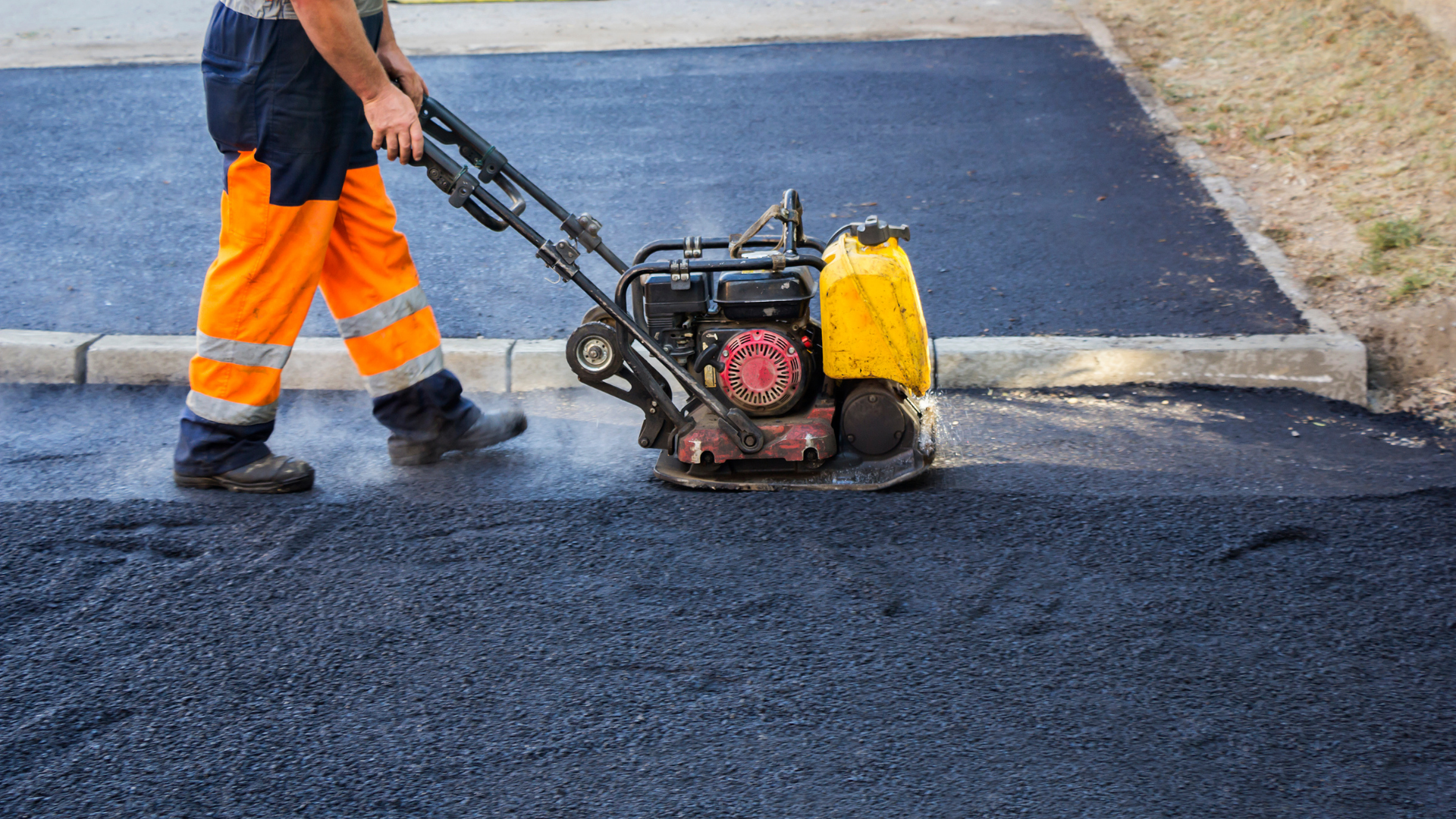
Several factors influence how workable a cool day really is:
Air and surface temperature. Many contractors set minimum temperature guidelines for placing asphalt, and those guidelines are usually stricter for thinner layers.
Thickness of the layer. Thicker lifts hold heat longer than thin overlays.
Wind. Wind pulls heat from the mat quickly, even when the air temperature looks acceptable.
Base condition. A cold, wet base steals heat from the asphalt above it.
Haul distance. The longer the material travels, the more heat it loses before it's placed.
Because of this, experienced crews often prefer late morning through afternoon in cool months, when surfaces have warmed up. Properly timed asphalt paving in cool weather is absolutely possible, but it calls for planning rather than improvisation. Our article on asphalt paving lifespan explains why compaction quality has such a big effect on how long a surface lasts.
Cool Weather and Concrete
Concrete is more forgiving of cool temperatures than many people expect, but it has its own rules.
Cooler temperatures slow the hydration reaction, so concrete gains strength more slowly. That can extend finishing time and push back the date you can drive on the surface, a timeline covered in our article on how long concrete takes to cure.
The bigger concern is freezing. Fresh concrete that freezes before it gains early strength can suffer lasting damage. Guidance on cold weather concreting from the American Concrete Institute is built around preventing early-age freezing damage and maintaining curing conditions, which is why crews pay close attention to overnight lows.
Common protective steps include:
Choosing pour dates with mild overnight temperatures.
Adjusting the mix so concrete gains early strength more quickly.
Covering finished slabs with insulating blankets.
Avoiding placement on frozen or very cold ground.
Protecting the surface for the first few days, when it's most vulnerable.
On the plus side, cool weather avoids the rapid surface drying that makes summer pours so tricky, a problem explained in our article on Texas heat, clay soil, and concrete installation. For that reason, a mild cool day can produce excellent results.
Cool Weather and Pavers
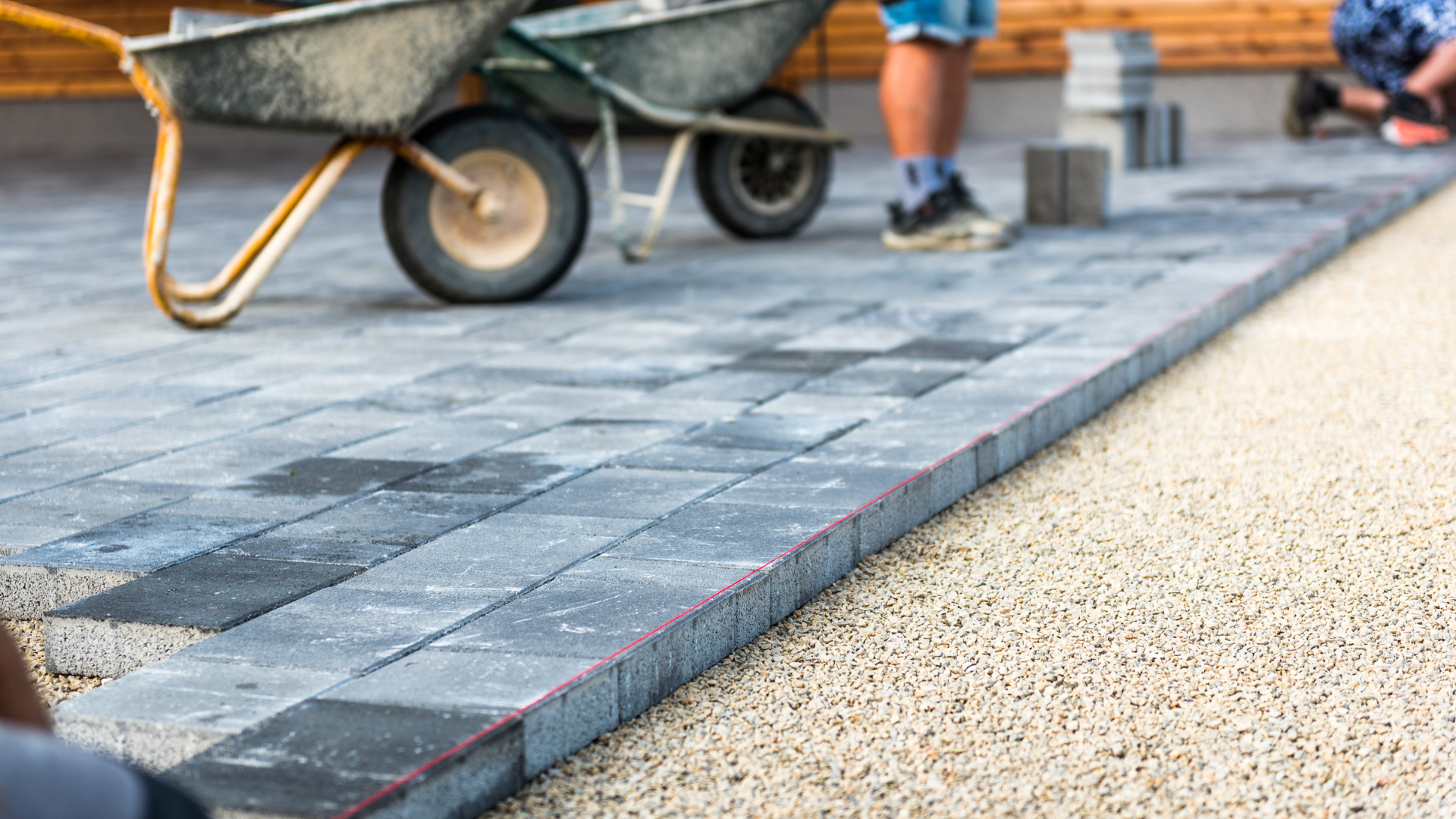
Concrete pavers handle cool conditions better than poured materials. Since they're set unit by unit on a compacted base and bedding layer, there's no curing clock to worry about.
The main limits are practical. Excavation and base compaction need workable soil, and very wet or frozen ground makes that difficult. Bedding sand that's saturated or frozen can't be screeded and leveled properly. When the ground is in good shape, though, a paver installation can proceed through much of the cool season, which makes it a flexible option for projects that can't wait for spring.
Cool Weather and Sealcoating and Striping
Maintenance products are often the first to run into trouble in cool weather. Sealcoat and paint need time to dry and bond, and cool, damp, or humid conditions slow that process. Product labels typically specify a minimum temperature and a dry period before and after application, and contractors follow those instructions closely.
Applying sealer in marginal conditions can lead to a coating that stays tacky, wears unevenly, or peels. For that reason, many owners schedule sealcoating and striping for spring or fall rather than the coldest weeks. Our article on how often to seal coat an asphalt driveway in Texas covers timing in more detail.
The Advantages of Cool Weather Paving
It's not all downsides. Cooler conditions bring real benefits.
Less heat stress on crews. Comfortable temperatures help crews stay sharp and productive.
Gentler curing for concrete. Slower, steadier curing can support a denser, more durable surface.
Easier scheduling. The off-peak season often gives contractors more flexibility.
Faster cooling of asphalt after compaction. Once properly compacted, a mat in mild conditions can be ready for traffic sooner than in peak summer heat.
Our article on the best time of year to pour concrete in Austin and Houston compares all four seasons if you're weighing different months.
How to Plan a Cool-Weather Project
A few steps keep your project on track.
Watch the forecast, especially overnight lows. Local forecasts from the National Weather Service offices for Houston and Galveston and Austin and San Antonio are a good starting point.
Give your contractor flexibility. A window of dates is better than one fixed day.
Ask about the cold-weather plan. A good contractor should be able to explain how they handle cool mornings, frost risk, and curing protection. Our guide to questions to ask before hiring a concrete contractor includes this topic.
Expect some schedule movement. Our article on how weather delays affect paving timelines in Texas explains what to expect when the forecast shifts.
Don't skip the basics. Proper sub-base preparation matters in every season, as covered in our article on why sub-base prep determines how long pavement lasts.
Pave Smart in Any Season With Pavetec
Cool weather doesn't have to mean a postponed project. With the right timing and protection, concrete, asphalt, and pavers can all be installed successfully through much of the cooler season. At Pavetec, we adjust our schedule and methods to the conditions, and we won't cut corners to hit a date when the weather isn't right for your material.
📍 Proudly serving Houston & Austin, TX
Wondering if now is a good time for your project? Let's talk it through.
📞 Contact us at (832) 674-3996 or message us to schedule your free consultation.